Skip to content

Free things to do in Paphos

Our top five free things to do in Paphos are Petra tou Romiou (Aphrodite’s Rock), Coral Bay, the Baths of Aphrodite, the Paphos harbour promenade and the church of Panagia Chrysopolitissa with St Paul’s Pillar. Entry to all of them is free; the extras you may pay for are sunbeds and umbrellas at Coral Bay, and the paid sights nearby are not on this page.

Checked on 17 October 2026

Every place on this page is free to enter. “Free entry” means that no ticket is needed. For beaches this rests on the Visit Cyprus statement that all beaches in Cyprus are public and free of charge; for the harbour promenade and the coast at the Sea Caves, an official source describes a public place to walk. Sunbeds and umbrellas at Coral Bay are for hire; an amount appears only where an official source states one, because prices change. The Pafos Archaeological Park, the Tombs of the Kings and the Medieval Castle at the harbour charge entry and are left out on purpose. The nature trails here, such as the Aphrodite trail and the trail at Petra tou Romiou, are free for public use, and any extra cost shows in the cost row. Opening times appear only where a source states them, as for the church compound. Where a source mentions a car park we say so; check on site whether parking is charged. Each place shows the date we last checked it. Please check on site before you go.

Beaches

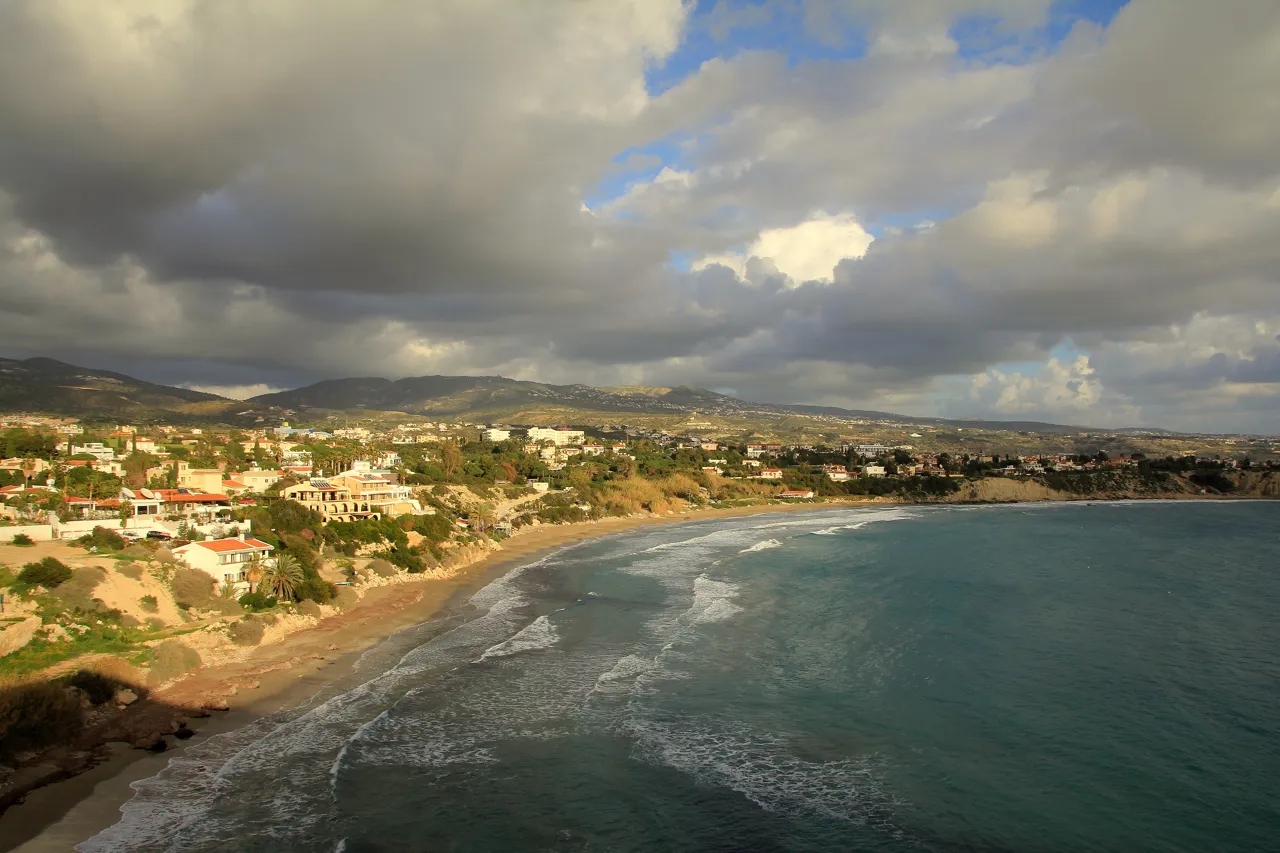
Curved sandy bay seen from above, with waves breaking, houses along the shore and dark clouds over the hills
Photo: Wojciech Biegun · CC BY-SA 3.0 · cropped

Coral Bay

Sandy bay 12 km north of Kato Pafos between two limestone headlands, with lifeguards in season

Cost
Free entry · Sunbeds charged
Time needed
90–240 min
Best time
Summer
Parking
Car park available

Coral Bay is a beach about 500 m long with deep golden sand. Visit Cyprus describes calm, shallow, clean water, which makes it a popular choice for families, and says the bay is enclosed by two limestone headlands. The Pafos Regional Board of Tourism places it 12 km north of Kato Pafos and notes that many beach parties are held here in summer, attracting thousands of visitors. Toilets, showers, changing rooms, bins and water sports are on site, and sunbeds and umbrellas are available for hire, so those are extras that cost money. Lifeguards are on duty from 15 April to 31 October. The beach offers disabled access, and Visit Cyprus says a bus stop is nearby and car parking is available; check on site whether parking is charged. Route 615 runs here from the Tombs of the Kings station.

Tip In summer the regional tourism board mentions beach parties with thousands of visitors, so arrive early if you want space on the sand.

Source www.visitcyprus.com ·
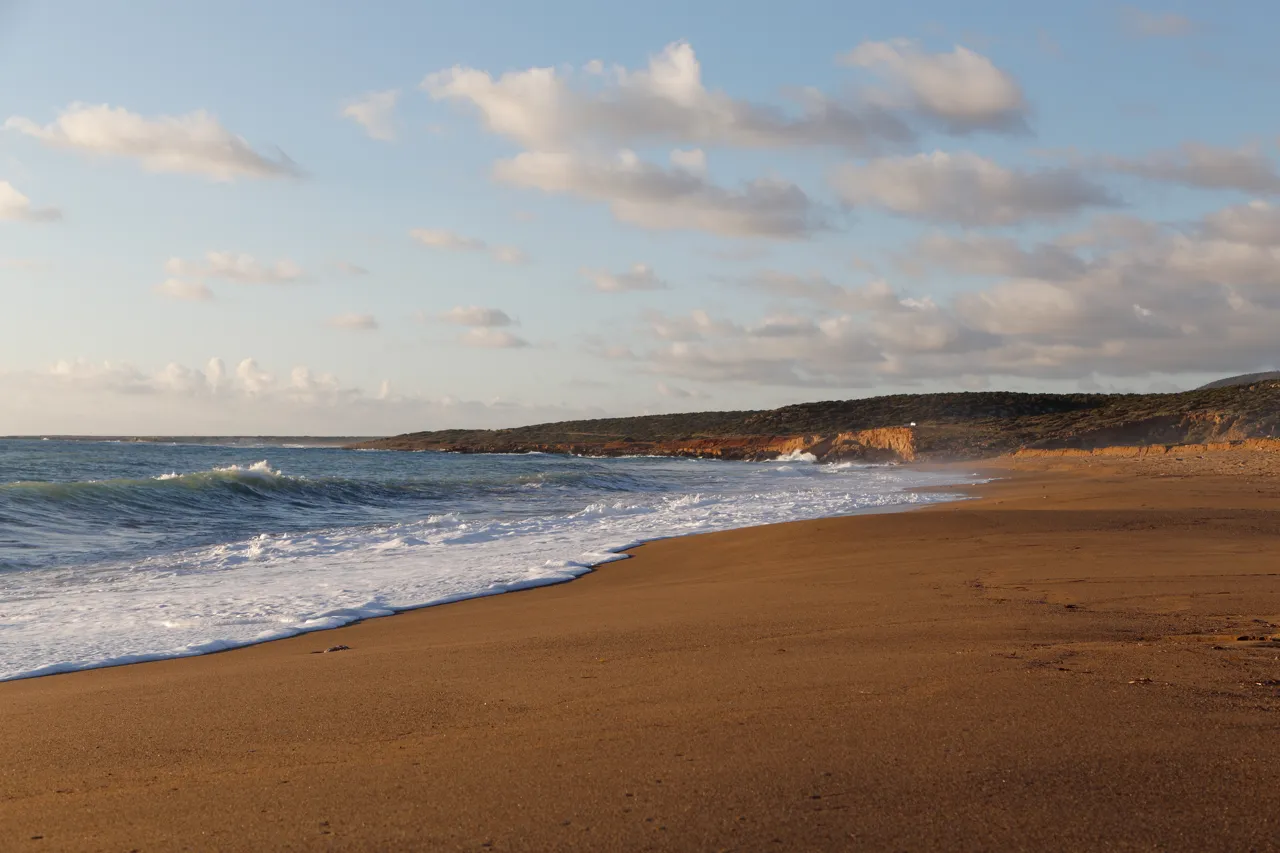
Wide sandy beach in golden light with surf rolling in and a low rocky headland in the distance
Photo: Dm Bsg · CC BY 3.0 · cropped

Lara Bay

Remote sandy beach on the Akamas coast, without lifeguards, in a protected turtle area

Cost
Free entry
Time needed
90–240 min
Best time
Morning

Lara is a sandy beach on the Akamas coast. Visit Cyprus describes it as a sanctuary for two protected sea turtles, the green turtle and the loggerhead, and the Department of Forests says the coast of Lara and Toxeftra has been declared a marine life protection area to protect them. The Cyprus Tourism Organisation warns that along this coast the waters can be dangerous and there are no lifeguards around, so if the weather allows a swim, do it cautiously. The area is remote: it names only two restaurants nearby, one of them close to Lara Bay, and advises bringing water. The Akamas municipality describes the road down to Lara as downhill and bumpy.

Tip Bring water and food: the Cyprus Tourism Organisation calls the area remote, with only two restaurants close by.

Source akamasmunicipality.org.cy ·

Nature & hikes

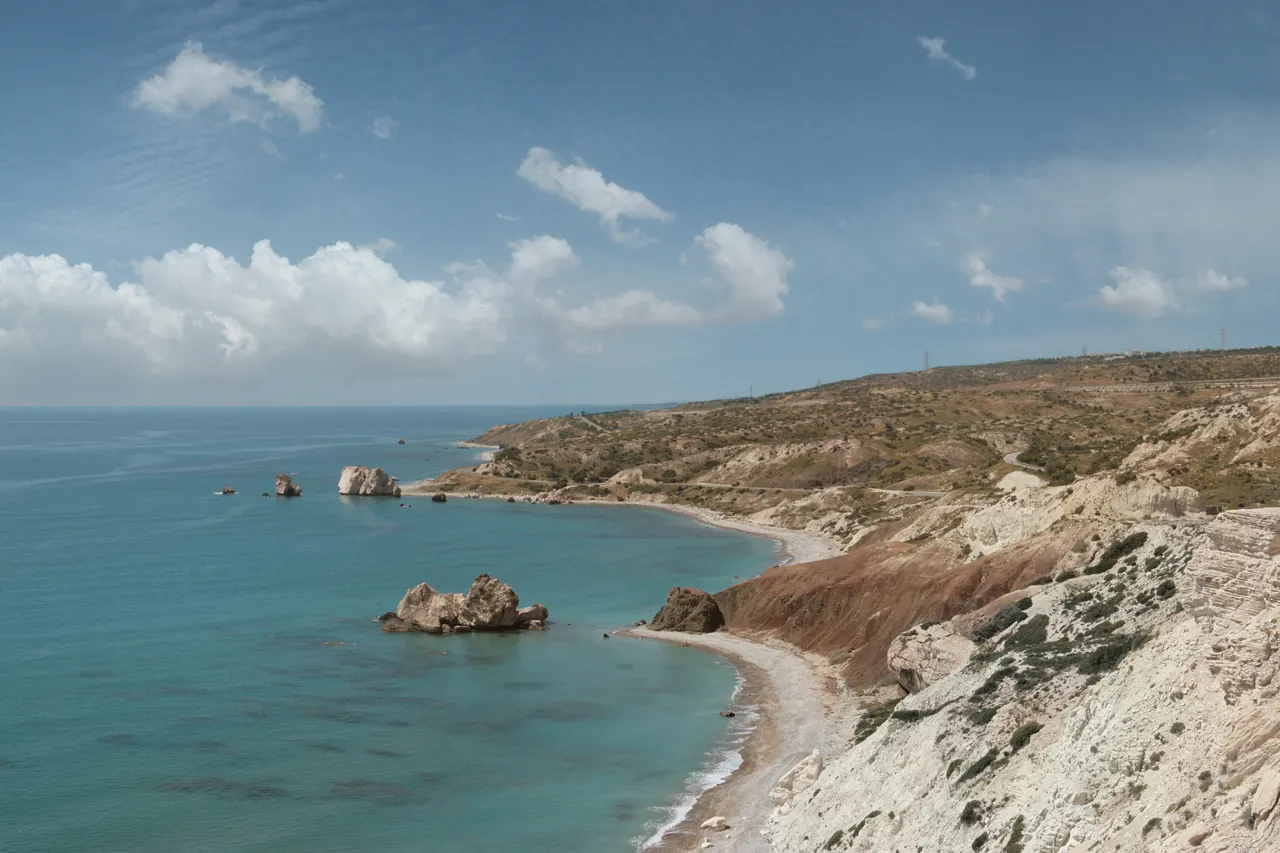
Turquoise bay with two rocks in the water, pale cliffs and a thin sandy shore under a partly clouded sky
Photo: Anna Anichkova · CC BY-SA 3.0 · cropped

Petra tou Romiou (Aphrodite’s Rock)

Rocks on the coast that legend names as Aphrodite’s birthplace, inside a national forest park

Cost
Free entry
Time needed
30–90 min
Best time
Sunset

Visit Cyprus describes Petra tou Romiou as an interesting geological formation of huge rocks and the mythical birthplace of Aphrodite. The Greek name means “rock of the Greek” and comes from the Byzantine hero Digenis Akritas, who in legend heaved the rocks there to keep raiders at bay. In certain weather the breaking waves form a column of foam that briefly looks like a human shape, and local belief says that swimming around the rock three times brings blessings. The site lies inside the Petra tou Romiou National Forest Park, about 350 hectares, and an underpass opposite the tourist pavilion leads down to the coast. The Department of Forests has also built a nature trail from above the pavilion to a vantage point about 2 km away. Swimming around the rock is a legend, not a recommendation: check sea conditions and lifeguard cover on site before going in.

Tip Use the underpass opposite the tourist pavilion to reach the shore; for sunset, the regional tourism board recommends the clifftop view from the old Paphos to Limassol road.

Source www.visitcyprus.com ·

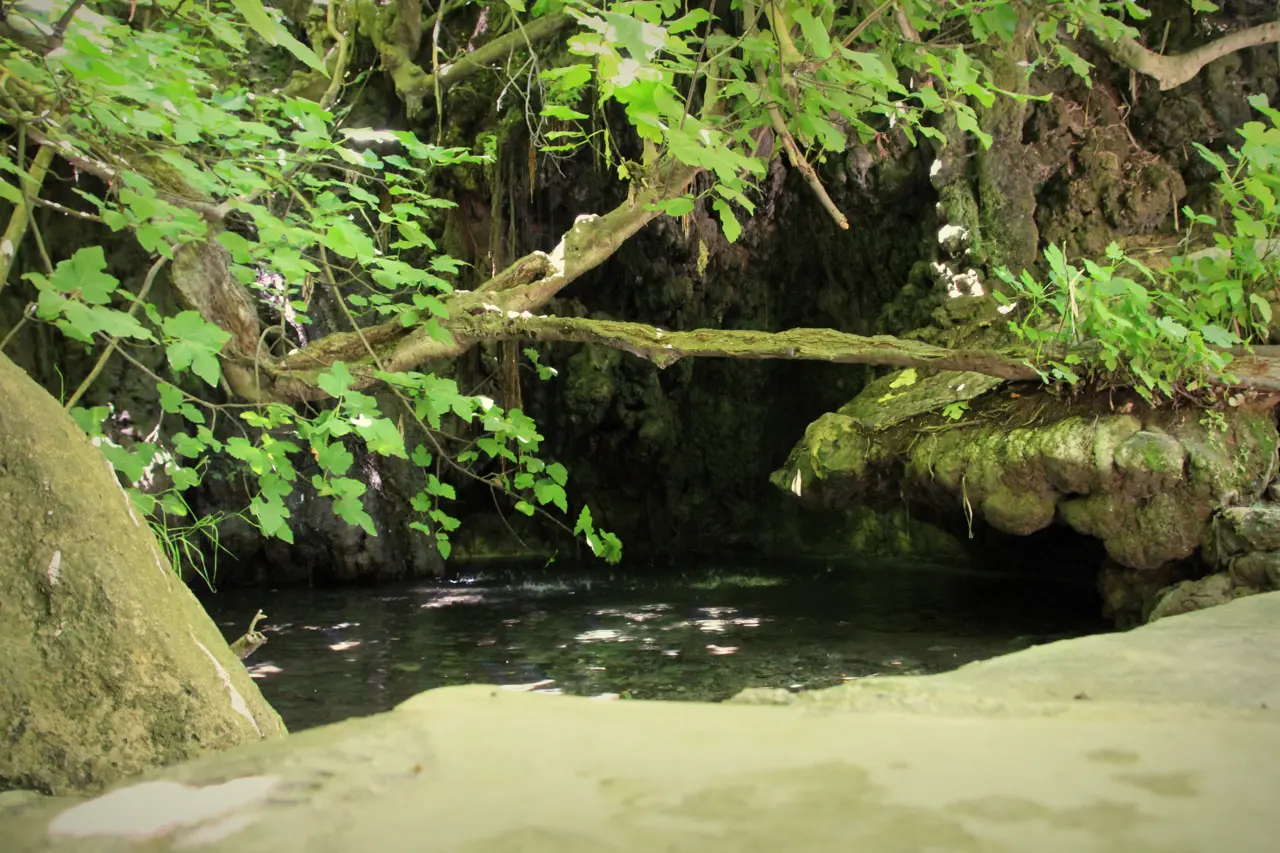
Still dark pool in a mossy grotto, framed by green leaves and a branch overhead, with smooth pale rock in front
Photo: Wojciech Biegun · CC BY-SA 3.0 · cropped

Baths of Aphrodite

A shaded natural pool under a fig tree and the start of the free Aphrodite nature trail in Akamas

Cost
Free entry
Time needed
45–240 min
Best time
Spring
Parking
Car park available

The Baths of Aphrodite are a small pool in a natural grotto under a fig tree on the Akamas Peninsula, reached by a short nature trail past a botanical garden. The Visit Cyprus audio guide puts the pond at around 5 m across and 1 m deep, and the Municipality of Polis says bathing is prohibited today, so this is a place to look at, not to swim in. Nature trails are free for public use, and the Aphrodite circular trail starts here: the Department of Forests gives 7.5 km and about 3 hours, rocky in places with a risk of slipping, and cycling and motorbikes are forbidden. A car park, a café-restaurant and a kiosk with Akamas information are at the trailhead. From Polis, follow the coastal road towards Neo Chorio and turn right about 1 km before the village; route 622 also runs from Polis.

Tip Bring your own water and sturdy shoes: the Visit Cyprus trail page says the two fountains on the route are not drinkable.

Source www.visitcyprus.com ·

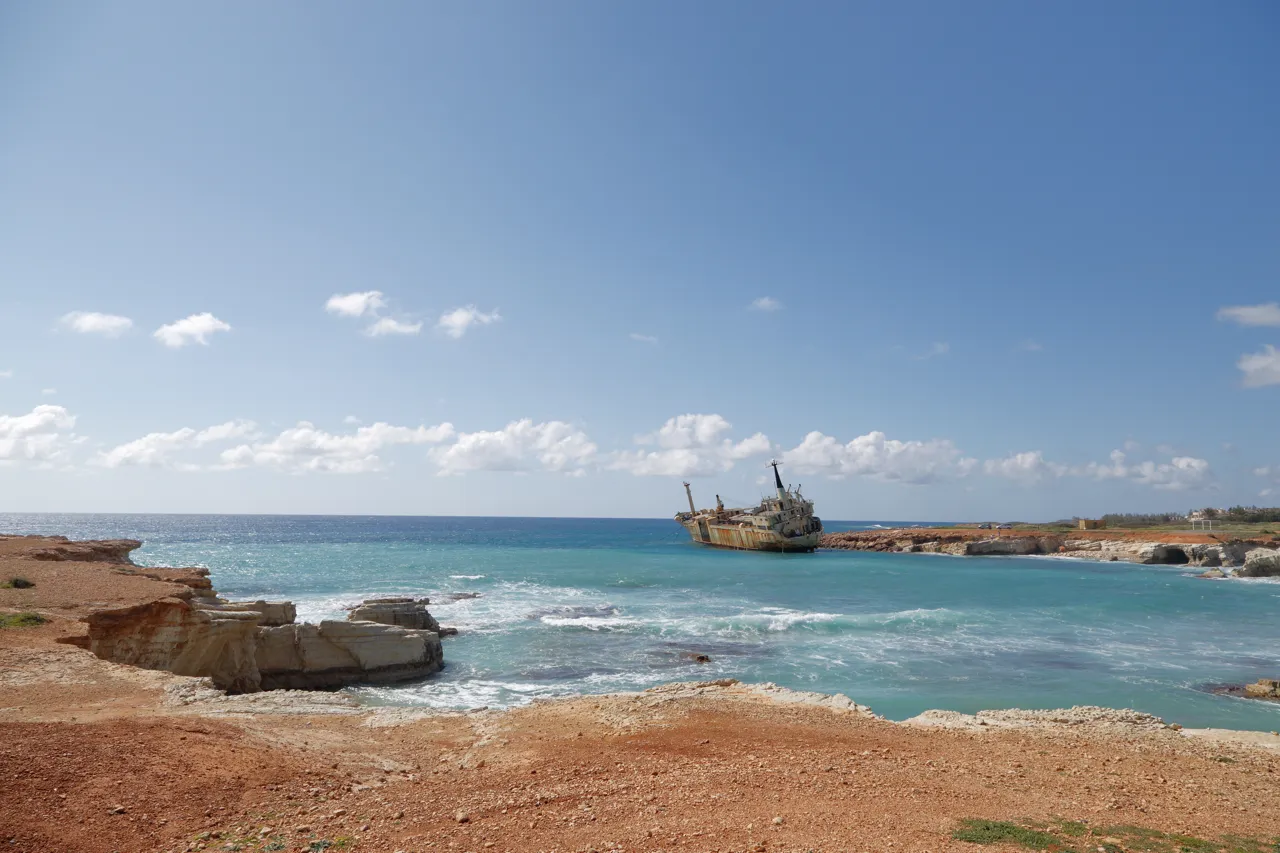
Rocky red-brown coast above a turquoise bay with surf, and a rusty wreck aground near the shore under a blue sky
Photo: Dm Bsg · CC BY 3.0 · cropped

Peyia Sea Caves

Rocky coast with sea caves, cliffs up to 20 m and the Edro III wreck beside a café and benches

Cost
Free entry
Time needed
30–90 min
Best time
All year

The Municipality of Akamas, formerly Peyia, describes the Sea Caves as a stretch of coast where the visitor can explore, step by step, rock aisles, coastal formations and caves shaped by marine erosion. Seals occasionally rest and breed there, so keep your distance. High rocky shores reach up to 20 m at some points of the bay: stay back from the edge, particularly with children. On 8 December 2011 the ship Edro III hit the rocks of the sea caves in a storm, and the municipality writes that it has remained there to this day. Next to it the municipality lists a café or restaurant and benches that look out over the sea. It is public coast, open to walk along. Route 616B runs from Coral Bay to Agios Georgios via the Sea Caves.

Tip Look at the wreck from the benches and keep well back from the cliff edge, especially with children.

Source akamasmunicipality.org.cy ·

Culture & history

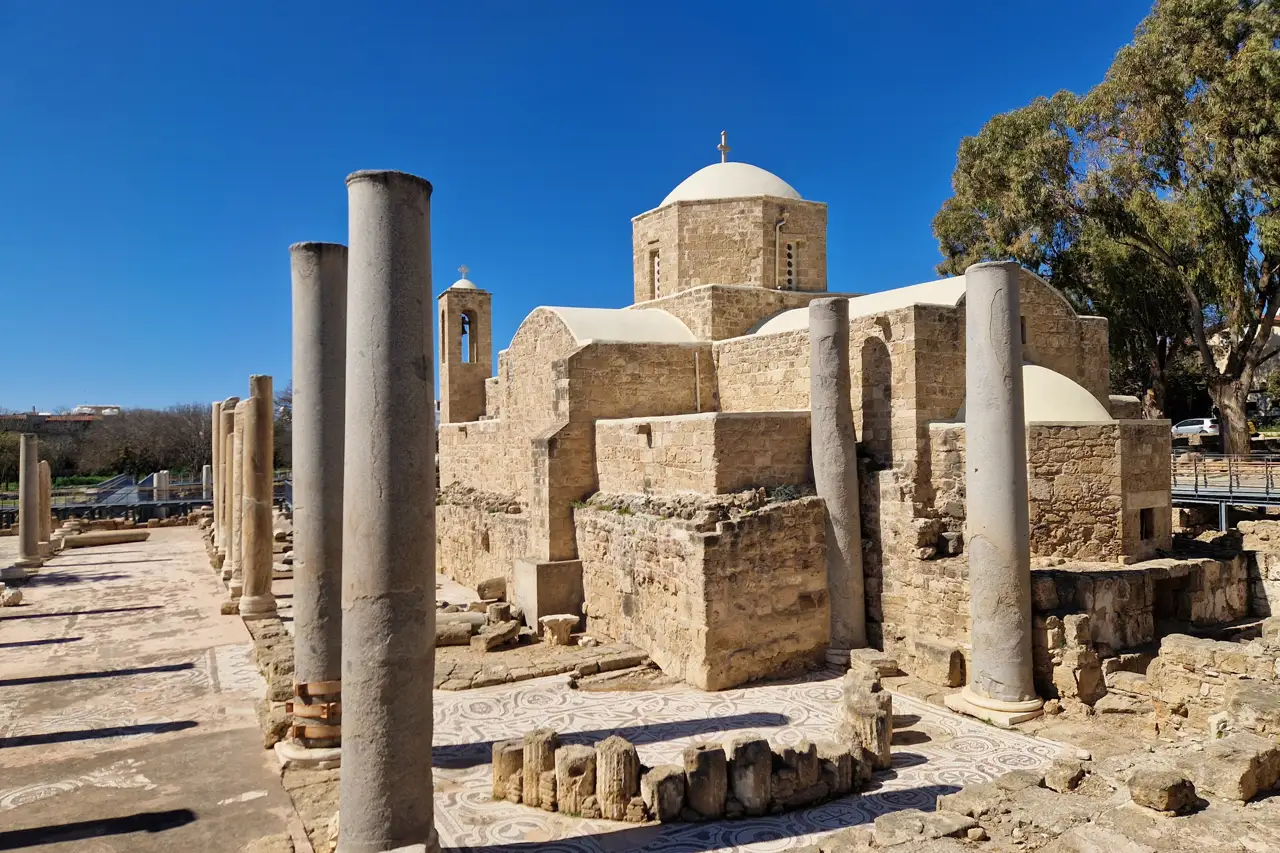
Small domed stone church behind rows of tall columns and low basilica ruins, in bright sunshine

Panagia Chrysopolitissa and St Paul’s Pillar

Church compound in Kato Pafos with Early Byzantine basilica ruins, floor mosaics and St Paul’s Pillar

Cost
Free entry
Time needed
20–45 min
Best time
All year

Panagia Chrysopolitissa is a church in Kato Pafos built over the ruins of the largest Early Byzantine basilica on the island. The basilica was originally seven-aisled and later reduced to five, floor mosaics and granite and marble columns survive, and the Pafos Regional Board of Tourism dates the mosaics to the 4th and 6th centuries. Inside the compound stands St Paul’s Pillar, where by tradition Paul was flogged before the Roman governor Sergius Paulus was converted to Christianity. Entry is listed as free. The site is open daily, from 08:30 to 17:00 in winter (16 September to 15 April) and from 08:30 to 19:30 in summer (16 April to 15 September), and times can change without notice. The church is still used for worship by several denominations and is a popular wedding venue. The site is wheelchair accessible.

Tip Check for a service or a wedding before you go in: the church is in use, so keep your voice down and respect anyone at prayer.

Source www.visitpafos.org.cy ·

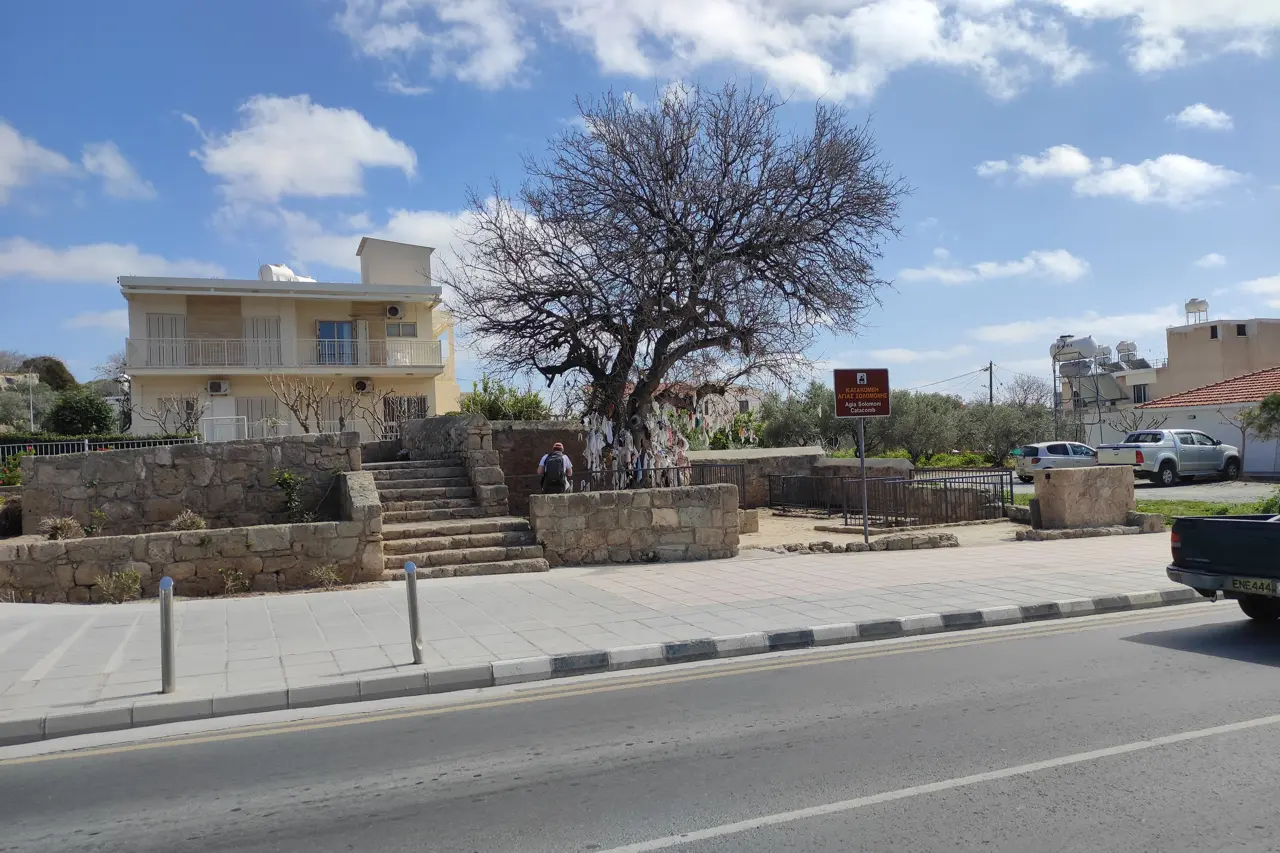
Bare tree above stone steps and a low wall, with a quiet road and a building behind under a blue sky
Photo: Fry72, Karel Frydrýšek · CC BY-SA 4.0 · cropped

Agia Solomoni Catacomb

Small underground chapel in Hellenistic rock-cut tombs, with a sacred tree above and a spring inside

Cost
Free entry
Time needed
15–30 min
Best time
All year

The Agia Solomoni Catacomb is a chapel that forms part of a small underground complex of Hellenistic chamber tombs in Kato Pafos, and a medieval pilgrimage site. Visit Cyprus describes an open court surrounded by five rock-cut chambers, one of which has a spring. The west chamber keeps remnants of 12th-century Christian wall paintings, and 13th-century Crusader names are scratched into the plaster. Above the catacombs stands a sacred tree whose branches are hung with colourful rags and bits of clothing, believed to have curative powers. The place lies on Apostolou Pavlou Avenue, about 1 km from the harbour. Visit Cyprus lists admission as free; check opening times on site. The chambers may be reached down several stone steps into a damp grotto, so it is not step-free. The saint’s feast day is 1 August.

Tip Wear shoes with a good grip: the way down may be several stone steps into a damp grotto, so it is not step-free.

Source www.visitcyprus.com ·

Towns & harbours

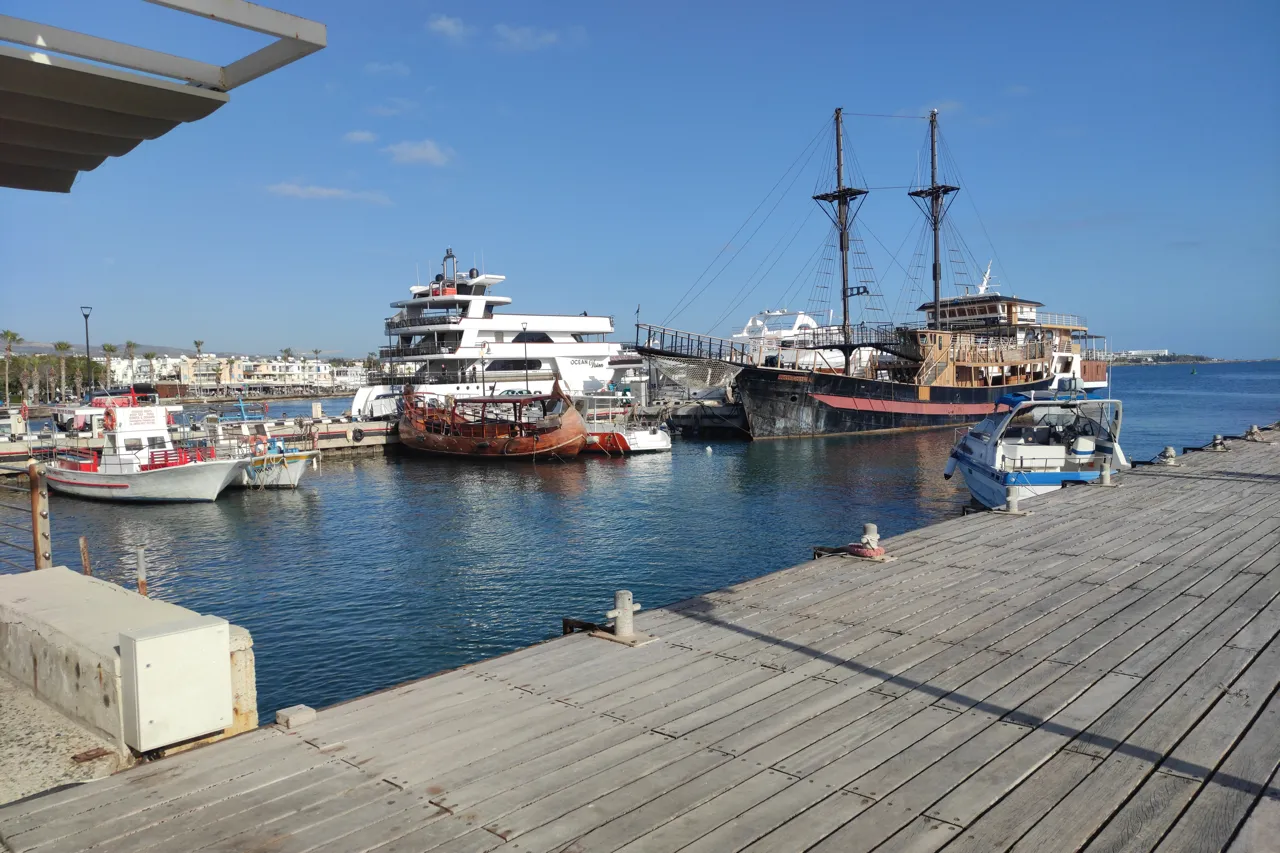
Wooden quay at Paphos harbour with moored boats, a tall-masted ship and a white tour boat under a blue sky
Photo: Fry72, Karel Frydrýšek · CC BY-SA 4.0 · cropped

Paphos Harbour Promenade

The municipality’s western seafront walkway, starting at the small harbour of Kato Pafos

Cost
Free entry
Time needed
45–120 min
Best time
Sunset

The municipality’s western seafront pedestrian way begins at the small harbour (Limanaki) of Kato Pafos and runs to the Paphos and Chlorakas boundary. It is 6.85 km in total, of which 4.25 km is the main route. The central path is at least 4 m wide with continuous sea views, and squares, seating and viewing points line it. The municipality also states the aim of better access to the seafront for people with disabilities. The route starts at the traditional harbour and the medieval castle and passes through the Kato Pafos archaeological site and the Tombs of the Kings area. The castle, the Archaeological Park and the Tombs of the Kings charge entry and are not part of this place; the harbour and the promenade are public space. The regional tourism board lists the Kato Pafos coastline among its places for sunrise and sunset.

Tip Walk it in the late afternoon: the regional tourism board lists the Kato Pafos coastline for sunset, and the path has continuous sea views.

Source pafos.org.cy ·

Nearby guides

  • Cyprus

    Free places across the rest of the island, from the Troodos mountain trails and villages to the Molos promenade in Limassol, the walls of Nicosia and the salt lake at Larnaca.

Frequently asked questions

Are the beaches in Paphos free?
Yes. Visit Cyprus states that all beaches in Cyprus are public and free of charge. Sunbeds and umbrellas are available for hire, for example at Coral Bay, and cost money; the Guide to Cyprus lists showers, sunbeds and umbrellas at municipal beaches as available for a fee. Lifeguards at Coral Bay are listed from 15 April to 31 October.
Is the Paphos Archaeological Park free?
No. The Pafos Regional Board of Tourism lists an entrance fee for the Archaeological Park, the Tombs of the Kings and the Medieval Castle at the harbour, so they are not on this page. The harbour promenade that passes them is public space and free to walk.
Is Aphrodite’s Rock free to visit?
Visit Cyprus lists Petra tou Romiou under Admission: Free. The site lies in a national forest park, and an underpass opposite the tourist pavilion leads down to the shore. Nature trails are free for public use, and the Department of Forests trail from above the pavilion to a vantage point about 2 km away is one of them.
Can you swim at the Baths of Aphrodite?
No: the Municipality of Polis says bathing in the pool is prohibited today. You can walk the free Aphrodite nature trail from here instead; bring your own water, because the Visit Cyprus trail page says the two fountains along the route are not drinkable.
Is the church with St Paul’s Pillar free, and when is it open?
Entry is listed as free. It is open daily from 08:30 to 17:00 in winter and to 19:30 in summer, but times can change without notice, and the church is in use for services and weddings. The site is listed as wheelchair accessible.
Is there parking at the free places, and does it cost money?
Visit Cyprus says car parking is available at Coral Bay, and the Department of Forests names a car park at the Baths of Aphrodite. Check on site whether it is free or charged. For the other places, check parking on site.