Travel guide: Ayia Napa
Ayia Napa is a former fishing village near the south-eastern tip of Cyprus: lively in the evening, with beaches that range from busy to secluded. Plenty of it costs nothing: all beaches in Cyprus are public and free of charge, including Nissi Beach and Makronissos Beach, the nature trails of Cape Greco are free for public use, and the monastery and the sculpture park charge no entry. Only extras such as showers, sunbeds, umbrellas and the Cape Greco visitor centre are charged.
Checked on 16 October 2026
Best time to visit
For swimming, plan on June to November: Visit Cyprus gives the open sea as above 22 °C in those months, rising to 27 °C in August. From January to March it averages 16 to 17 °C. The lifeguards at the beaches in this guide are listed for April to October, so outside those months swim with extra care. April and May are described as an excellent season for nature, with green countryside and flowers in bloom, though nights can be slightly chilly, and the Department of Forests names spring as the most suitable period for the Konnoi to Agioi Anargyroi trail, which passes the Kamara tou Koraka arch. Autumn brings warm days and cool evenings in October. Summer means high temperatures and cloudless skies, so keep walks and the monastery for the morning.
Getting to Ayia Napa
Visit Cyprus describes Larnaca International Airport as well connected with most European cities and as a short drive from Ayia Napa. Cyprus has no trains, so the choice is a hire car, a taxi or a bus. Visit Cyprus lists airport transfer buses that link the towns with the island's two airports, and interurban buses that link the major towns daily; for timetables it points you to the operating companies, so check the current times before you travel. Town taxis run around the clock and must use a meter. If you drive, remember that traffic keeps to the left-hand side of the road.
Getting around
The harbour and the centre are the starting point for the nearest beaches. Pantachou begins at the harbour and runs east to Glyki Nero, which Visit Cyprus places 1 km east of the centre. To the west, Nissi Beach is 3.3 km from the centre, and a pedestrian path along the coast links Vathia Gonia, Landa and Makronissos. OSEA, the Famagusta District Transportation Organization, runs a west circle line, route 201, that stops at Vathia Gonia, Nissi, Landa and Makronissos, and routes 101 and 102 serve Cape Greco, Konnos and Protaras. Its website shows live arrivals for each stop. Each published timetable has validity dates; the ones online when we checked ran until the end of October 2026, so make sure the timetable you use is still valid when you travel. Cape Greco lies about 7 km east of town, so a bus, a taxi or a hire car saves a long walk to the trails.
With children
For small children, the water is the first thing to check. Visit Cyprus describes the water at Nissi Beach and at Glyki Nero as shallow and calm, and lifeguards are stationed at the beaches in this guide from April to October. Toilets and changing rooms are on the beaches, and Landa has a picnic site in its area. At Cape Greco the visitor centre has a showroom with three large aquariums; entry is charged, with a reduced rate for children aged 6 to 11. The official trail guide warns that the south side of Kavos hill ends in steep, rocky cliffs, so keep children well back from every edge. Landa and Makronissos have floating wheelchairs and Vathia Gonia a Seatrac system, free for the public to use; ask the lifeguards.
When it rains or the sun is too strong
Most free places on this list are outdoors, so a wet day or a very hot midday calls for a change of plan. The monastery in the village square is free, donations are accepted, and it is open daily from 09:30 to 14:30 from November to April and from 09:30 to 19:00 from May to October, except on public holidays. The sculpture park is open from sunrise to sunset all year, which suits a short walk between showers. The Makronissos Tombs are open daily from 09:00 to 17:00. The Cape Greco visitor centre is the indoor option, with an exhibition and aquariums, but it charges entry and its hours differ by month, so check before you go. Visit Cyprus says rain is occasional. In summer heat, follow the municipality's advice for Cape Greco and start early, before it gets too warm.
Nearby: Cape Greco, Konnos and the coast path
Cape Greco is the natural next stop: it lies about 7 km east of Ayia Napa and 2 km south-west of Protaras. Konnos Bay has a sandy beach, a café with facilities and lifeguards from April to October, and the Konnoi – Cyclops Cave trail starts at the Konnos beach parking area. Bus routes 101 and 102 run from Ayia Napa through Cape Greco and Konnos to Protaras, Pernera and Paralimni, so check the last bus back on a timetable that is still valid. To the west, the coastal path from Ayia Thekla runs one way to the fishing harbour of Potamos tou Liopetriou and the other way to Vathia Gonia.
Top 5 free things in Ayia Napa
- Nissi Beach
Sandy bay west of town with shallow, calm water, beach bars and a small island offshore
- Cape Greco National Forest Park
Protected coastal forest park east of town with signposted nature trails, picnic areas and sea views
- Sea Caves
Caves cut into the sea cliffs at Cape Greco, a start point of the nature trail with a parking area
- Cape Greco Viewpoint
Hilltop lookout on Kavos hill with an all-round view of the cape, the coast and Ayia Napa
- Makronissos Beach
A 350 m beach made up of three bays, with a protected area at its south-west end and the tombs nearby
Costs something, still worth it
Bookable with Explorio
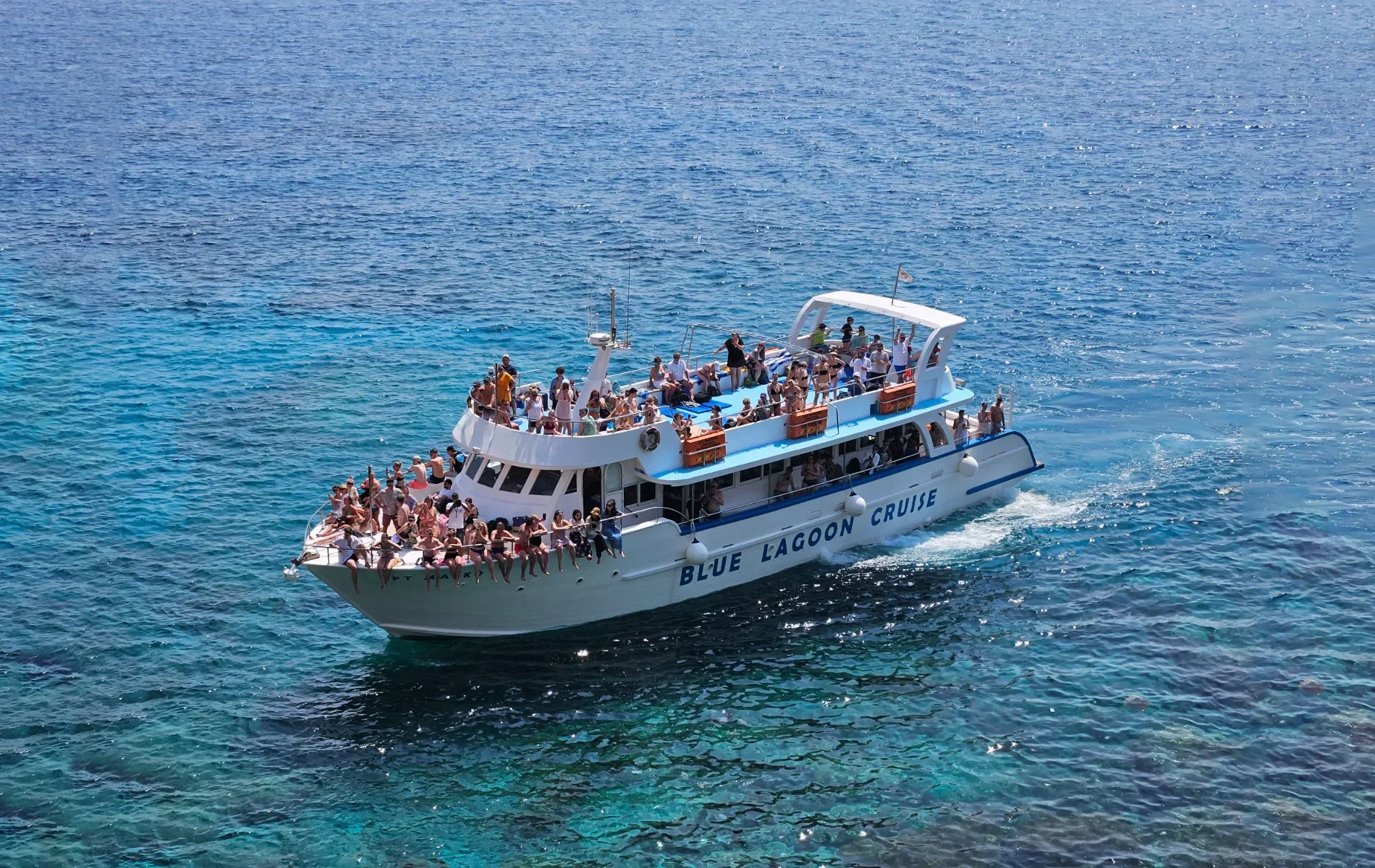
Blue Lagoon Cruise
4.5 hours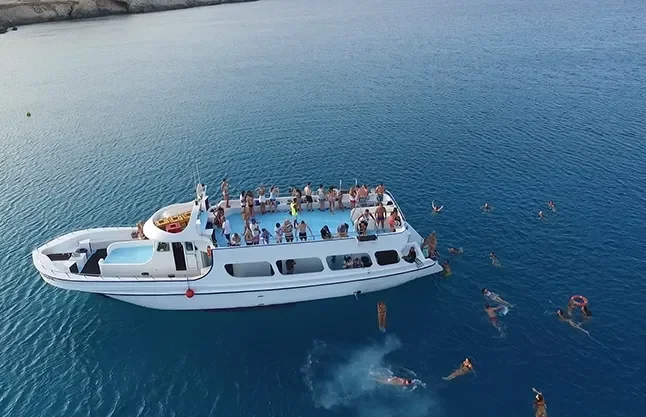
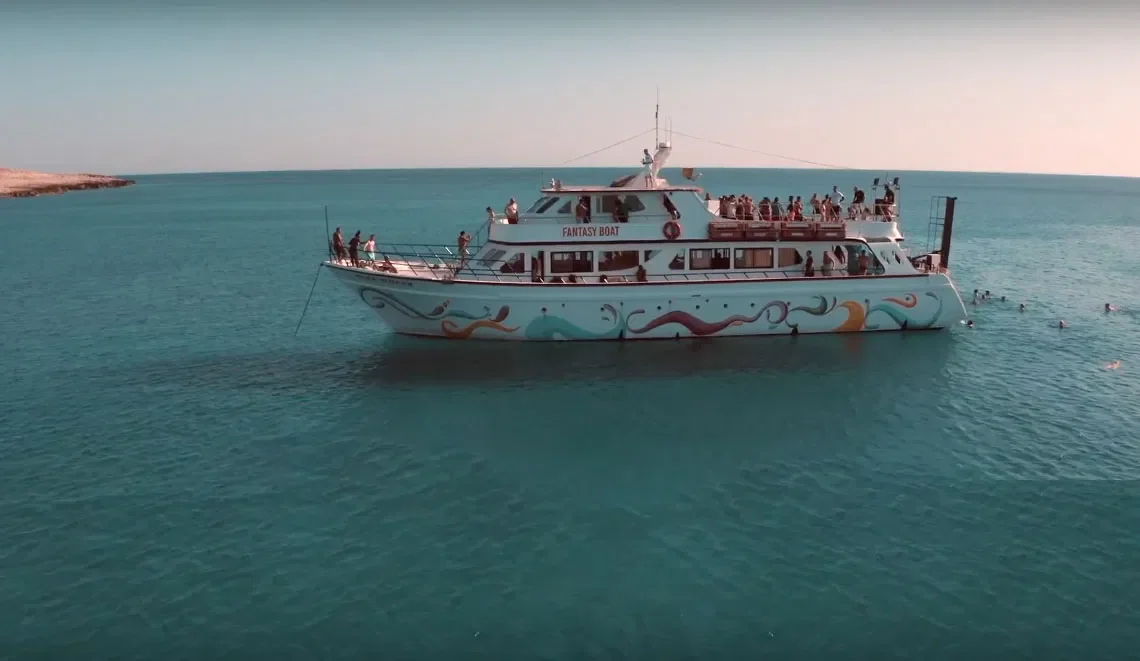
Fantasy Boat Party (16+)
4 hours • 16+Nearby guides
Frequently asked questions
- When is the best time to visit Ayia Napa for the beach?
- Visit Cyprus gives the open sea as above 22 °C from June to November, peaking at 27 °C in August, and lifeguards are stationed at the beaches from April to October. In April and May the countryside is green and the days pleasantly warm, but nights can be slightly chilly.
- How do I get from Larnaca airport to Ayia Napa?
- Visit Cyprus calls it a short drive. Cyprus has no trains; airport transfer and interurban buses serve the area, so check the operator's current timetable, or take a metered taxi.
- Do I need a car in Ayia Napa?
- Not for the town and the nearest beaches, which you can reach on foot or by bus, including the west circle line, route 201, as long as its timetable is still valid. A car, a taxi or the bus to Cape Greco helps, because the cape lies about 7 km east of the centre.
- Which side of the road do they drive on in Cyprus?
- On the left. Visit Cyprus points out that vehicles keep to the left of the road, not the right.
- Is Ayia Napa suitable for families?
- It can be: Visit Cyprus describes shallow, calm water at Nissi and Glyki Nero, lifeguards are stationed from April to October, and the sculpture park is free to enter. Keep children away from cliff edges at Cape Greco.
- What can we do in Ayia Napa when the weather is bad?
- Most free places are outdoors. The monastery is open until 14:30 from November to April and until 19:00 from May to October, and the Cape Greco visitor centre, which charges entry, is indoors.