Skip to content

Free things to do in Ayia Napa

Our top five free things to do in Ayia Napa are Nissi Beach, Cape Greco National Forest Park, the Sea Caves, the Cape Greco Viewpoint and Makronissos Beach. Entry to all of them is free; the extras you may pay for are showers, sunbeds and umbrellas at the organised beaches and the visitor centre at Cape Greco.

Checked on 16 October 2026

Every place on this page is free to enter. “Free entry” means that no ticket is needed. In the cost row, sunbeds at the beaches and the Cape Greco visitor centre are marked as charged; an amount appears only where an official source states one, because prices change. Showers and umbrellas at the organised beaches are charged as well. None of our sources says whether parking is free or charged, so the cost row shows no parking information; where a source mentions a car park, we say so. Each place shows the date we last checked it. Please check on site before you go.

Beaches

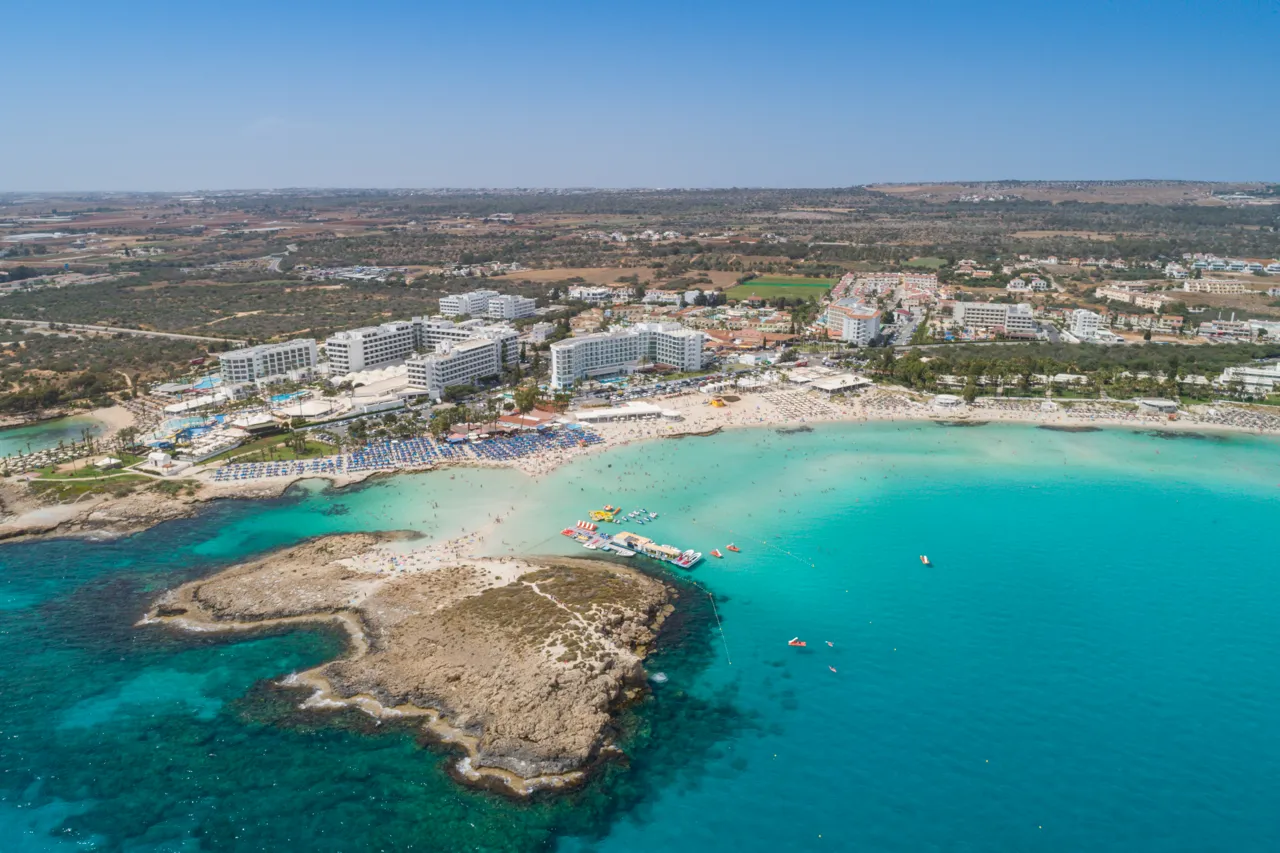
Aerial view of the small island in the turquoise bay, with the beach and hotels behind
Photo: dronepicr · CC BY 2.0 · cropped

Nissi Beach

Sandy bay west of town with shallow, calm water, beach bars and a small island offshore

Cost
Free entry · Sunbeds charged
Time needed
90–240 min
Best time
Morning
Parking
Car park available

Nissi Beach is about 600 m long and lies 3.3 km west of the centre of Ayia Napa. The bay is natural, with fine golden sand, and the water is shallow, calm and sheltered from the wind. Visit Cyprus says the small island that gives the beach its name can be reached on foot at low tide. It also attracts large crowds, thanks to its mix of coast, music, bars and beach parties. Toilets, changing rooms, water sports, beach bars and a diving school are on site; showers, sunbeds and umbrellas are available for a fee. Lifeguards are stationed from April to October. Nissi is listed for a Blue Flag in 2026, and car-parking facilities exist.

Tip Arrive in the morning, before the crowds Visit Cyprus describes, or walk east along the coast to Vathia Gonia, which it calls the less crowded of the two.

Source www.visitcyprus.com ·
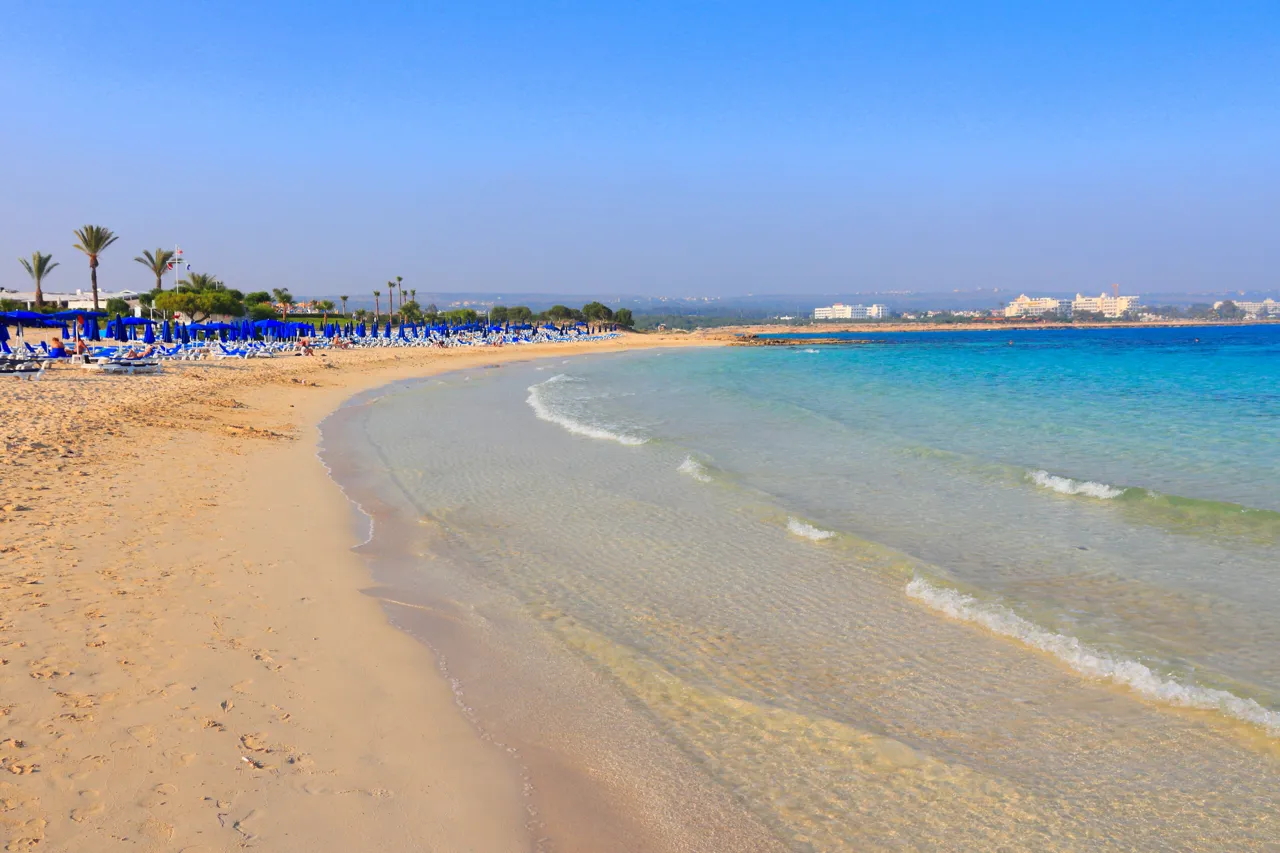
Gentle waves on a long sandy beach with a row of blue sunbeds under palms
Photo: Marek Ślusarczyk (Tupungato) · CC BY 3.0 · cropped

Makronissos Beach

A 350 m beach made up of three bays, with a protected area at its south-west end and the tombs nearby

Cost
Free entry · Sunbeds charged
Time needed
60–180 min
Best time
All year
Parking
Car park available

Makronissos is a beach of about 350 m made up of a cluster of three bays, 5 km from the centre of Ayia Napa. Visit Cyprus describes fine golden sand and relatively calm, clear water; the south-western part lies inside a Natura 2000 protected area. Toilets, changing rooms and water sports are on the beach, a convenience store is close by, and sunbeds and umbrellas are available for a fee. Lifeguards are stationed from April to October, and a floating wheelchair is free for the public to use; ask the lifeguards. The Makronissos Tombs are in the area of the beach. The beach is listed for a Blue Flag in 2026.

Tip Pair the beach with a short visit to the Makronissos Tombs, which are open until 17:00.

Source www.visitcyprus.com ·
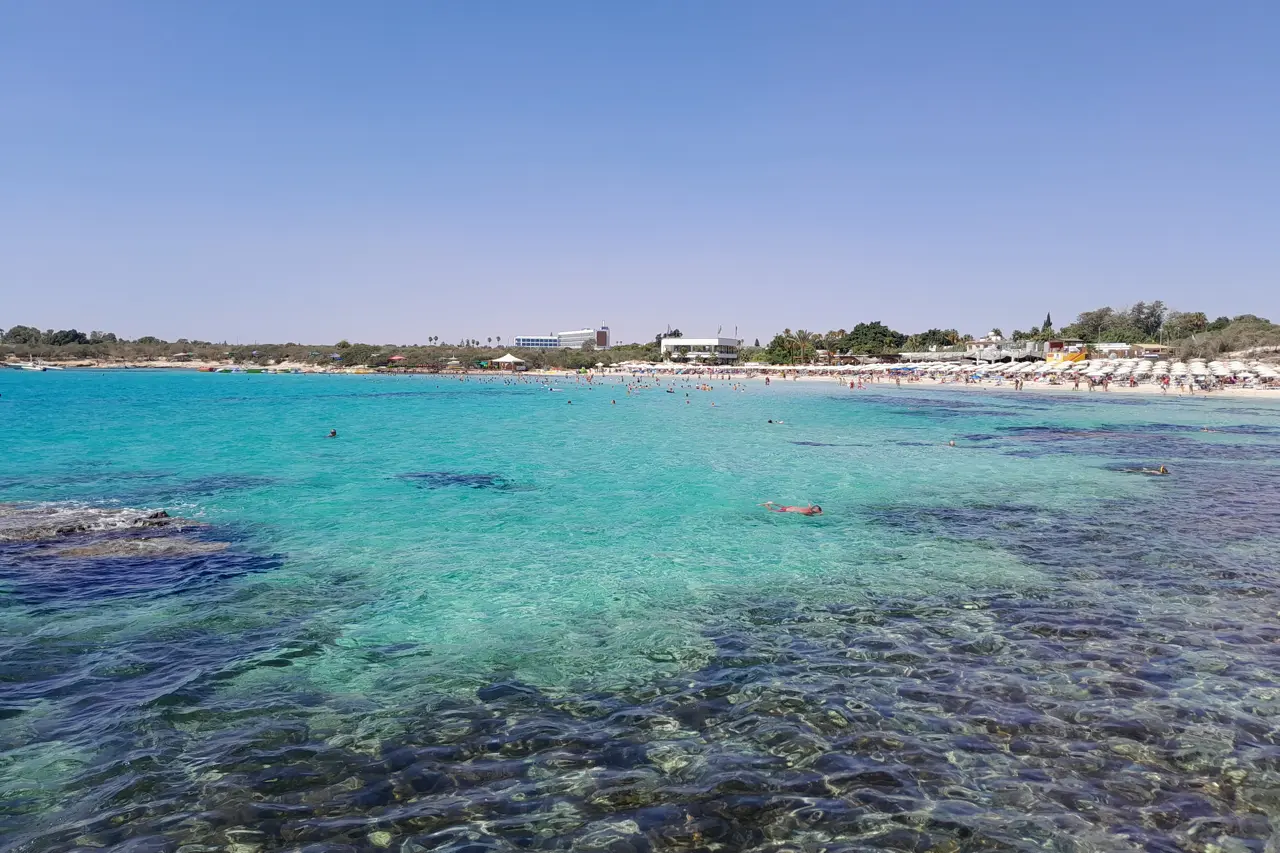
Clear turquoise shallows in a bay, with the beach and sunshades in the distance

Landa Beach

A 400 m sandy bay between Nissi and Makronissos, with a picnic site and a coastal path to its neighbours

Cost
Free entry · Sunbeds charged
Time needed
60–180 min
Best time
Morning
Parking
Car park available

Landa is a 400 m sandy beach, 4 km west of the centre of Ayia Napa, halfway between Nissi Bay and Makronissos. Visit Cyprus describes a natural bay with fine golden sand and clear, calm water. Toilets, changing rooms and water sports are on the beach, with sunbeds and umbrellas for a fee, and lifeguards are stationed from April to October. A special wheelchair is kept at the lifeguard tower to help disabled visitors into the sea. A footpath follows the coast and connects the neighbouring beaches, and there is a picnic site in the area. Landa is listed for a Blue Flag in 2026, and car-parking facilities exist.

Tip Take the pedestrian path to move on to the next beach: it links Vathia Gonia and Makronissos, so you can walk instead of driving.

Source www.visitcyprus.com ·
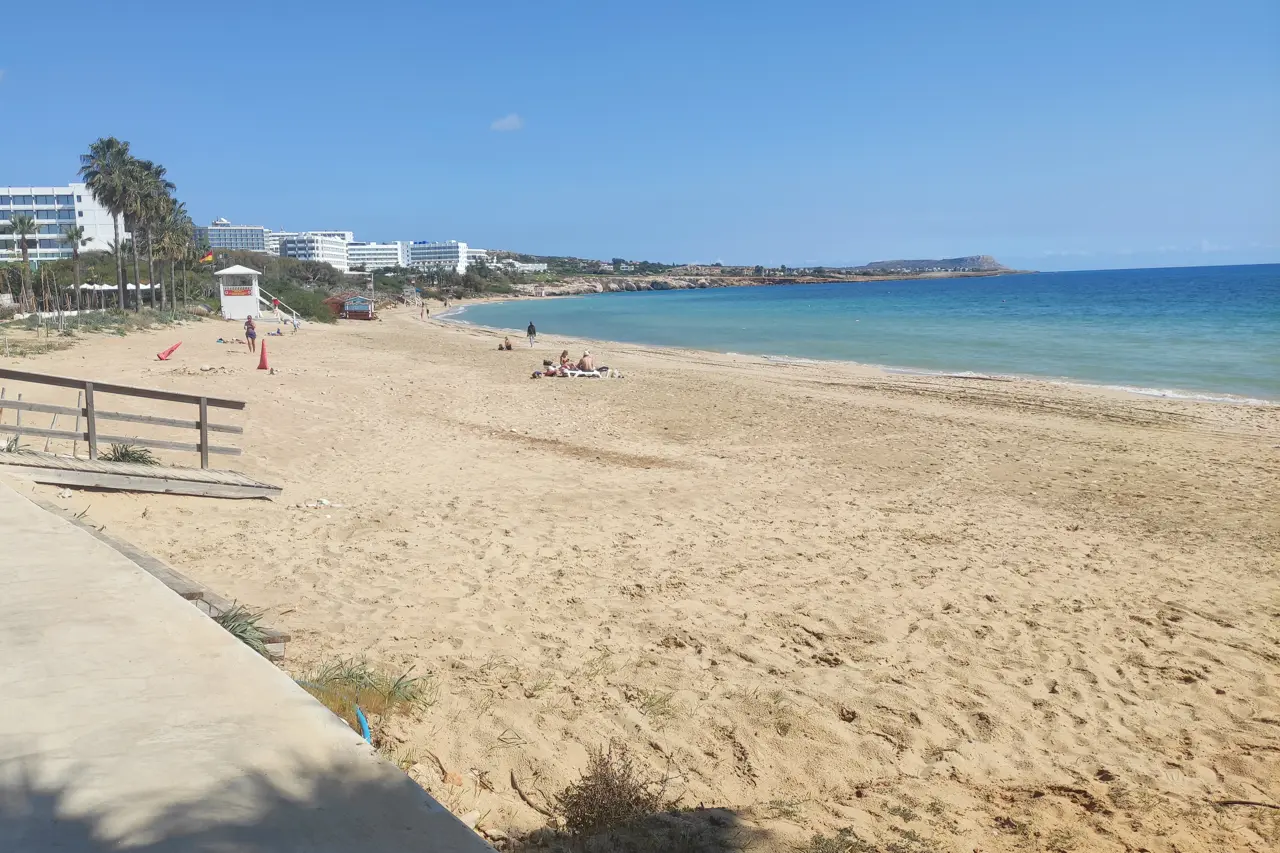
Wide sandy beach with palms and hotels along the shore under a clear sky
Photo: Fry72, Karel Frydrýšek · CC BY-SA 4.0 · cropped

Glyki Nero Beach

A 250 m sandy beach 1 km east of the centre; the name means sweet water; the shore runs west to the harbour

Cost
Free entry · Sunbeds charged
Time needed
45–120 min
Best time
Evening
Parking
Car park available

Glyki Nero means “sweet water” in Greek. Visit Cyprus describes a natural sandy beach of about 250 m, 1 km east of the centre of Ayia Napa, with fine golden sand and shallow, calm, clear water. The beach reaches towards the Sea Caves and continues west to the harbour, and the municipality describes the stretch as starting where Pantachou ends. Visit Cyprus and the municipality draw this strip slightly differently, so we give no exact boundaries. Toilets, changing rooms and water sports are on the beach, and sunbeds and umbrellas are available for a fee. Lifeguards are stationed from April to October. Glyki Nero is listed for a Blue Flag in 2026, and car-parking facilities exist.

Tip Take an evening stroll west along the shore towards the harbour; Visit Cyprus lists restaurants and kiosks in the general area.

Source www.visitcyprus.com ·
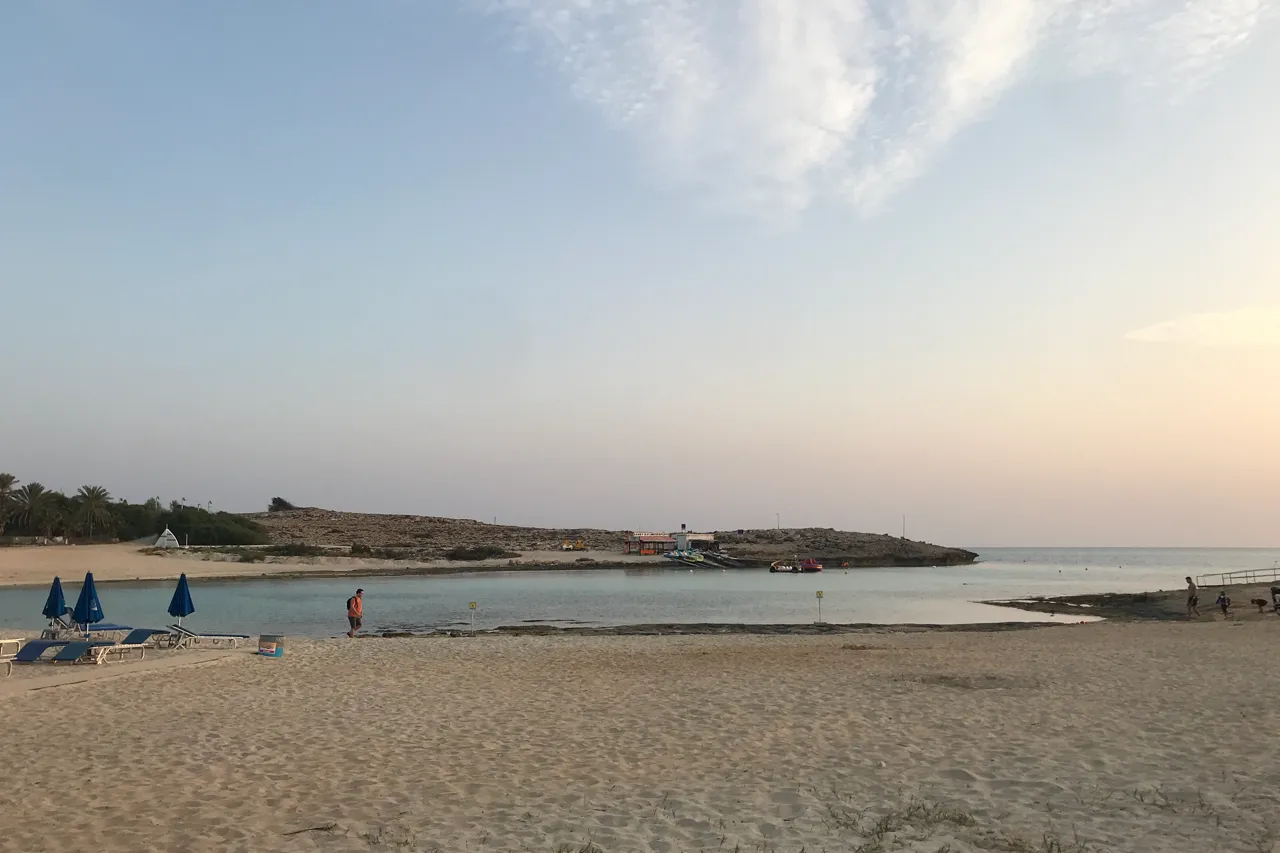
Wide sandy beach at dusk with a few blue sunshades and a person at the water's edge

Vathia Gonia Beach

A 300 m sandy bay 2.2 km west of the centre, quieter than Nissi, with a Seatrac for wheelchair users

Cost
Free entry · Sunbeds charged
Time needed
60–180 min
Best time
Morning
Parking
Car park available

Vathia Gonia is a 300 m beach, 2.2 km west of the centre of Ayia Napa and 400 m east of Nissi Bay, which Visit Cyprus calls the more crowded of the two. It is a sandy beach in a natural rocky bay, with fine golden sand and relatively calm, clear water. Toilets, changing rooms and water sports are on the beach, and showers, sunbeds and umbrellas are available for a fee. A Seatrac system gives wheelchair users and others with limited mobility independent access to the sea and is free for the public to use; ask the lifeguards. Lifeguards are stationed from April to October. Vathia Gonia is listed for a Blue Flag in 2026, and car-parking facilities exist.

Tip Use it as the quieter alternative to Nissi, and follow the coastal path if you want to reach Landa on foot.

Source www.visitcyprus.com ·
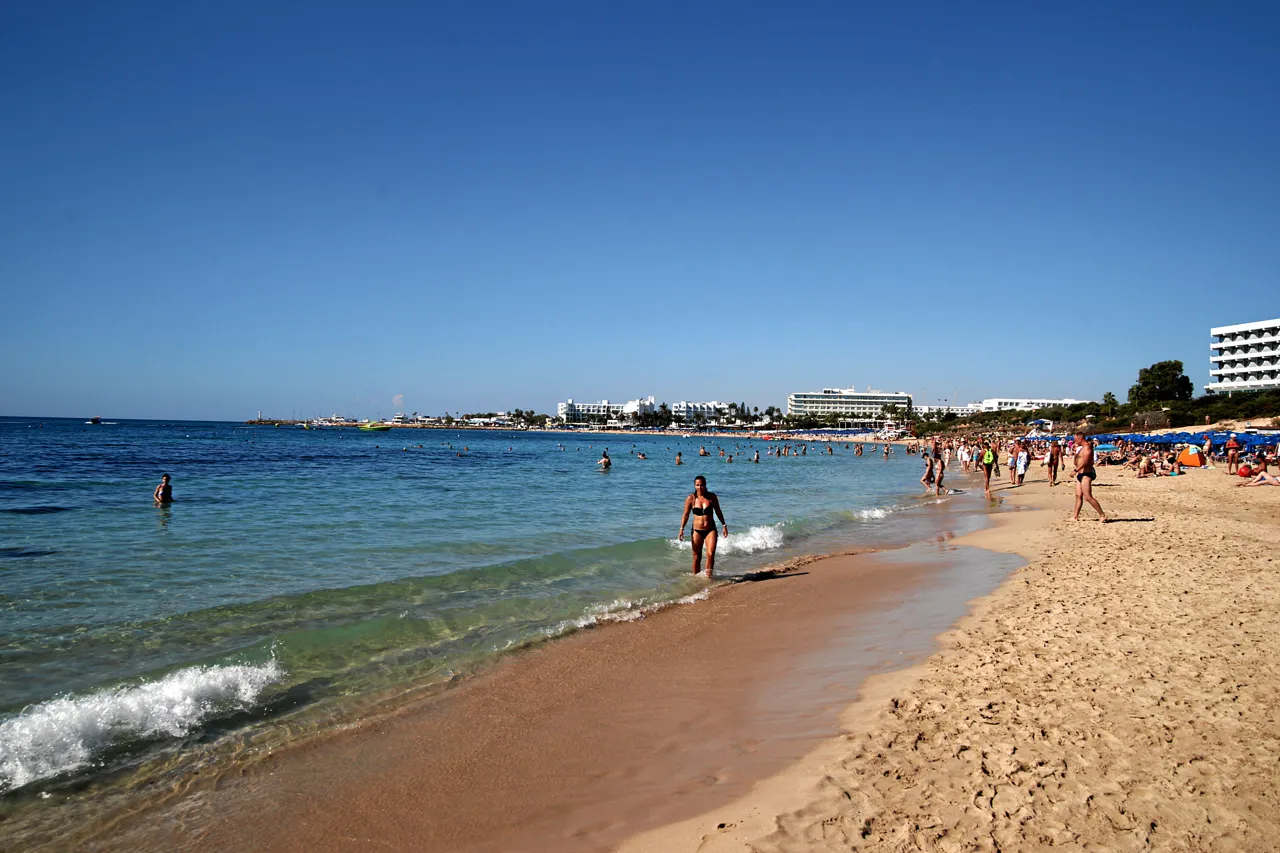
Long sandy beach with bathers in clear, shallow water and hotels along the shore in the distance
Photo: Mboesch · CC BY-SA 4.0 · cropped

Pantachou Beach

A 1.2 km sandy strip that starts at the harbour and runs east towards Glyki Nero

Cost
Free entry · Sunbeds charged
Time needed
60–180 min
Best time
Morning
Parking
Car park available

Visit Cyprus calls Pantachou the longest coastal strip in the region: about 1.2 km, beginning at the harbour and running as far as Glyki Nero Beach. The long natural bay has fine golden sand, and the water is relatively calm and clear. Toilets, changing rooms and water sports are on the beach, and sunbeds and umbrellas are available for a fee. Lifeguards are stationed from April to October. The Municipality of Ayia Napa notes that thousands of tourists visit every year, and the Deputy Ministry of Tourism lists the beach as partially accessible. Pantachou is listed for a Blue Flag in 2026. Where it ends and Glyki Nero begins is described slightly differently, so we give no exact boundary. Car-parking facilities exist.

Tip Go in the morning, before the many visitors the municipality mentions arrive.

Source www.visitcyprus.com ·
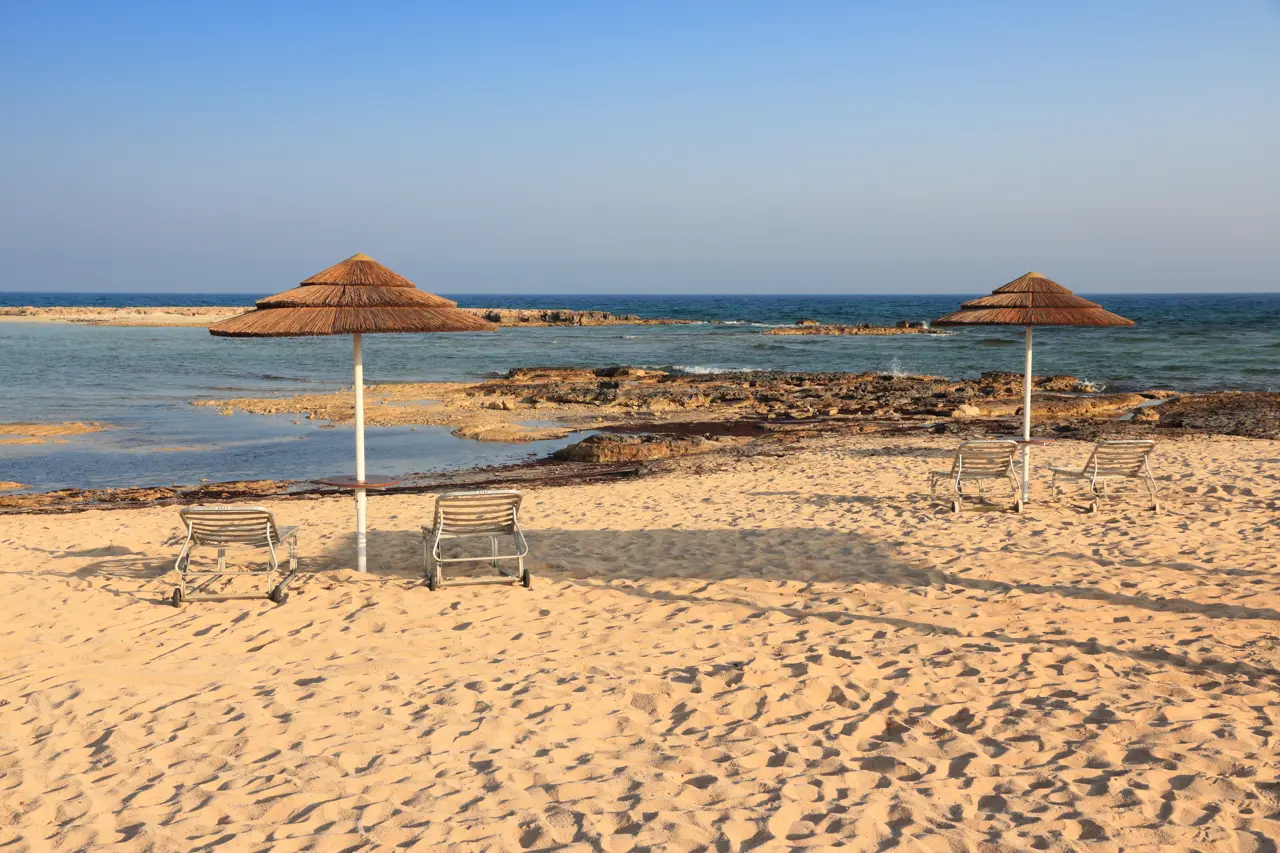
Sandy beach with two thatched sunshades and loungers, rocks and shallow sea behind
Photo: Marek Ślusarczyk (Tupungato) · CC BY 3.0 · cropped

Ayia Thekla Beach

A 300 m natural beach inside a Natura 2000 area, 6.5 km west of the centre

Cost
Free entry · Sunbeds charged
Time needed
60–180 min
Best time
Morning
Parking
Car park available

Ayia Thekla is about 6.5 km west of the centre of Ayia Napa. The 300 m beach lies inside the Natura 2000 special protected area, a natural setting with fine golden sand over a rocky bottom and relatively calm, clear water. Toilets, changing rooms and water sports are on the beach, a convenience store is close by, and sunbeds and umbrellas are available for a fee. Lifeguards are stationed from April to October, and a special wheelchair is kept at the lifeguard tower for disabled visitors. A footpath follows the coast from the beach, towards the fishing harbour of Potamos tou Liopetriou one way and towards Vathia Gonia the other. The beach is listed for a Blue Flag in 2026, and car-parking facilities exist.

Tip It is the beach furthest from the centre in this guide, so plan how you get back before you set out.

Source www.visitcyprus.com ·
Nature & hikes

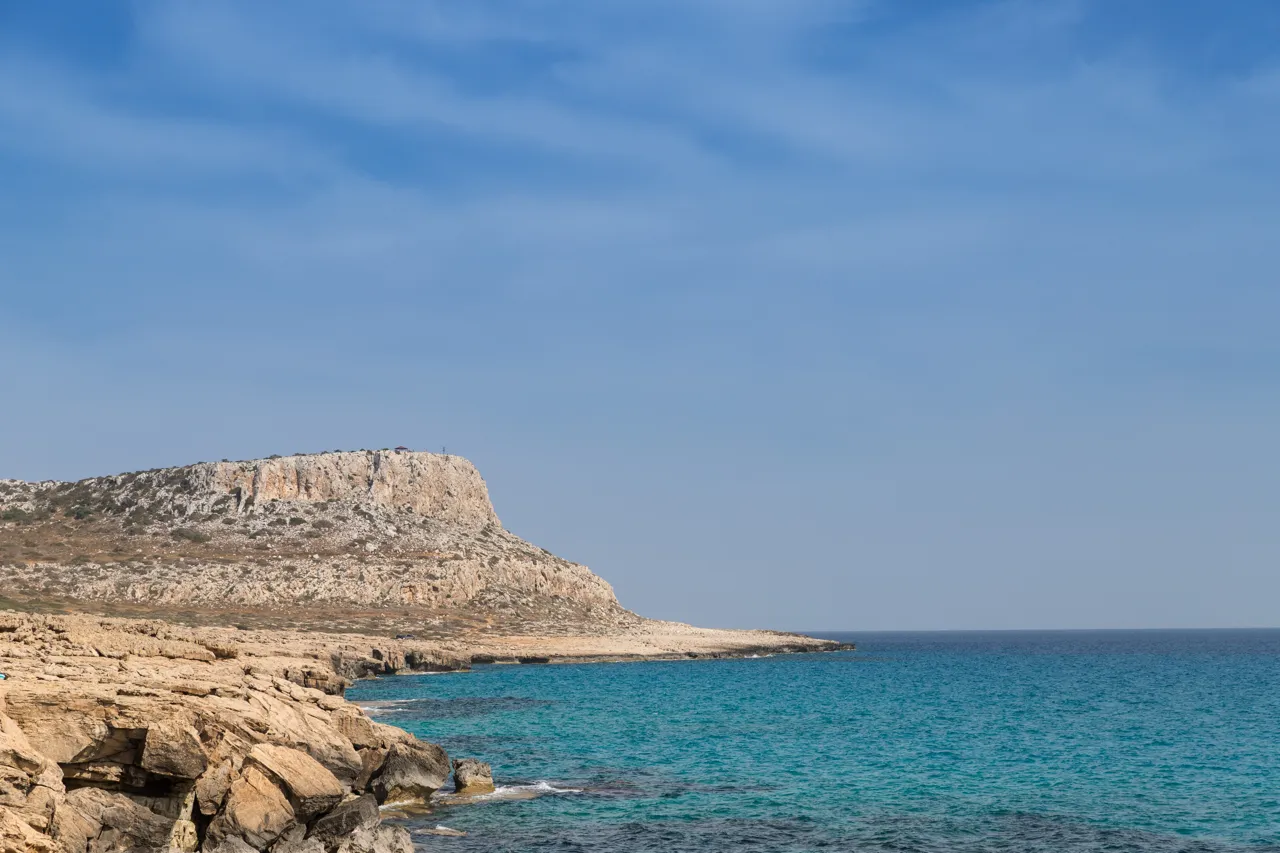
A rocky headland with pale cliffs above a turquoise bay
Photo: dronepicr · CC BY 2.0 · cropped

Cape Greco National Forest Park

Protected coastal forest park east of town with signposted nature trails, picnic areas and sea views

Cost
Free entry · Extras €2
Time needed
60–240 min
Best time
All year
Parking
Car park available

Cape Greco is a National Forest Park and a Natura 2000 site of 385 hectares, about 7 km east of Ayia Napa and 2 km south-west of Protaras. The Department of Forests lists a small picnic area, a refreshment kiosk, parking areas, a cycle path and a network of signposted trails. Nature trails are free for public use, so walking here costs nothing. The visitor centre inside the park is different: it charges entry, with a reduced rate for children, so treat it as an optional extra. Lighting fires is strictly forbidden anywhere in the forest. The municipality advises bringing water and a snack, and starting early, before it gets too warm.

Tip Read the signboard at the start of your trail: it usually shows a map, the rules of conduct and possible dangers such as cliffs.

Source www.visitcyprus.com ·
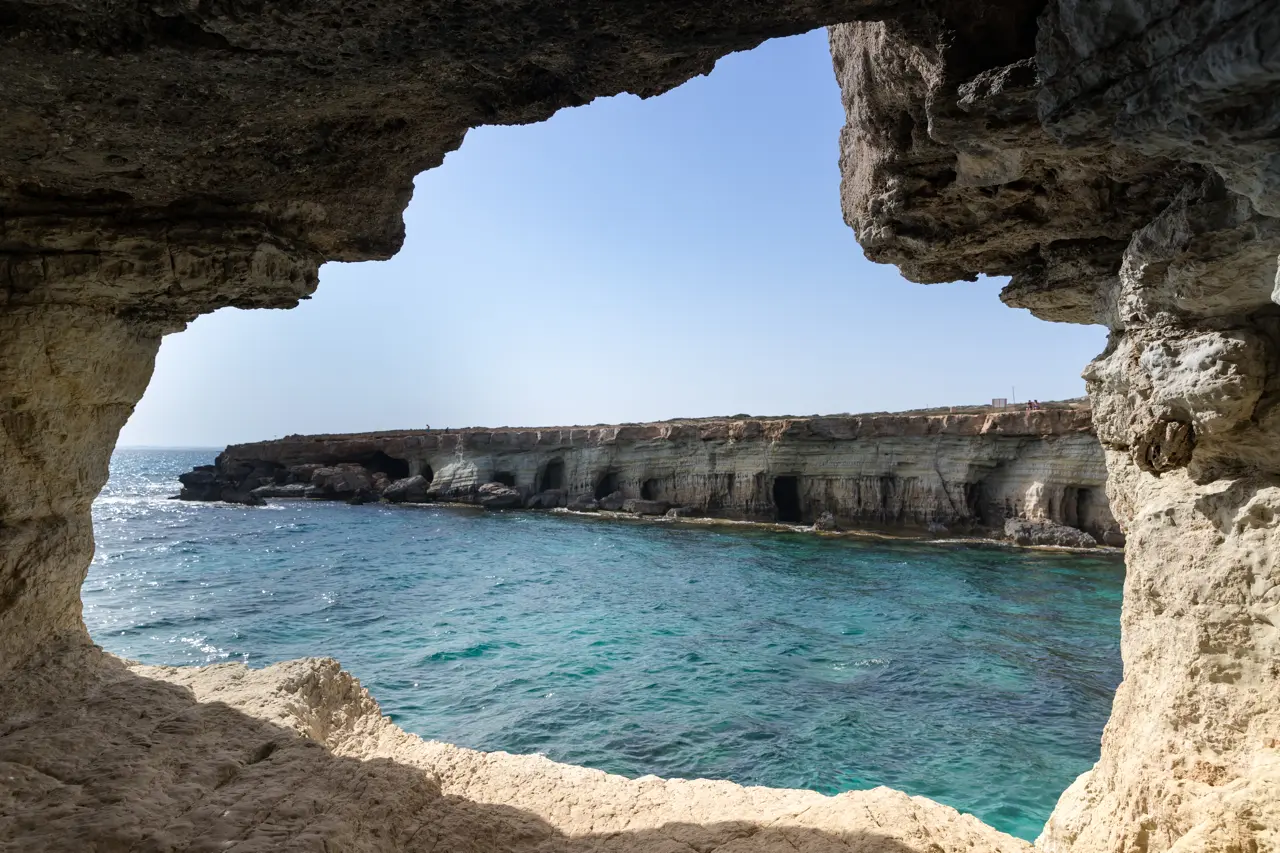
View through a cave opening onto a cliff with more caves along the sea
Photo: dronepicr · CC BY 2.0 · cropped

Sea Caves

Caves cut into the sea cliffs at Cape Greco, a start point of the nature trail with a parking area

Cost
Free entry
Time needed
20–60 min
Best time
Morning
Parking
Car park available

The Sea Caves mark one end of the Sea Caves to Agioi Anargyroi nature trail inside Cape Greco National Forest Park. The Municipality of Ayia Napa describes caves cut into the sea cliffs, with benches where visitors can rest and look down at the clear water. The official trail description calls the path smooth but rocky at some points, and a parking area is available at the trailhead. The Joint Rescue Coordination Centre has stated that jumping into the water at the sea caves is strictly forbidden, after a rescue there. Treat the caves as a place to look at, not to jump from, and keep well back from the cliff edge, particularly with children.

Tip Start in the morning with sturdy shoes and water, and save your swim for a beach with lifeguards.

Source www.visitcyprus.com ·
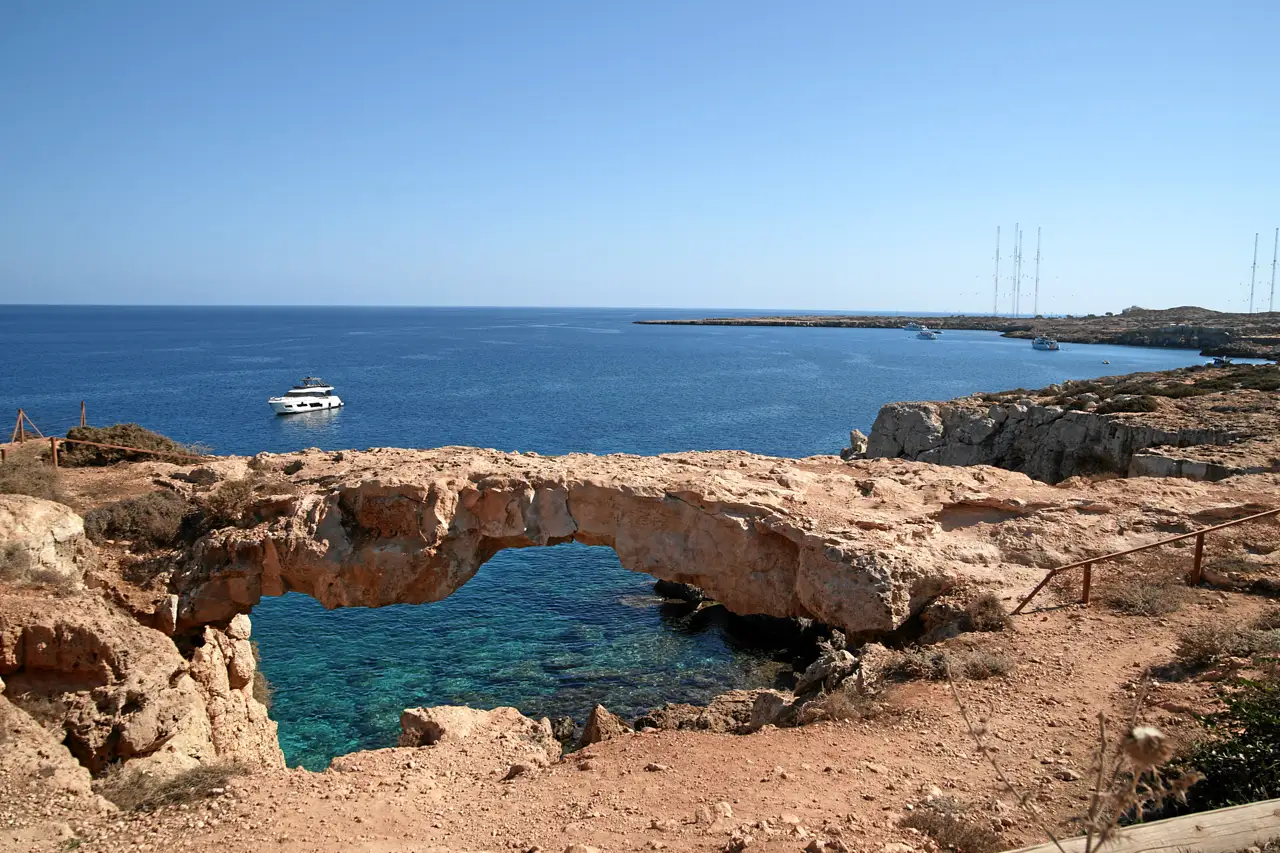
Natural stone arch over turquoise water on the rocky coast, a motor yacht on the open sea behind it
Photo: Mboesch · CC BY-SA 4.0 · cropped

Kamara tou Koraka

A natural stone arch on the Cape Greco coast, seen from the trail

Cost
Free entry
Time needed
15–45 min
Best time
Spring

Kamara tou Koraka is a natural stone bridge on the coast of Cape Greco, which the official trail guide calls an impressive geological formation. You pass it on the Sea Caves to Agioi Anargyroi trail and on the Konnoi to Agioi Anargyroi trail, which carries on past the ruins of an ancient temple of Aphrodite. Look at the arch from the trail and do not walk onto it. Nature trails are free for public use, so the walk has no entry fee. The Department of Forests names spring as the most suitable period for the Konnoi to Agioi Anargyroi trail, and both trail guides say there is no drinking water on the route.

Tip Come in spring, the period the Department of Forests names as the most suitable for the Konnoi to Agioi Anargyroi trail that passes the arch, and carry water, because there is none along the route.

Source www.visitcyprus.com ·

Culture & history

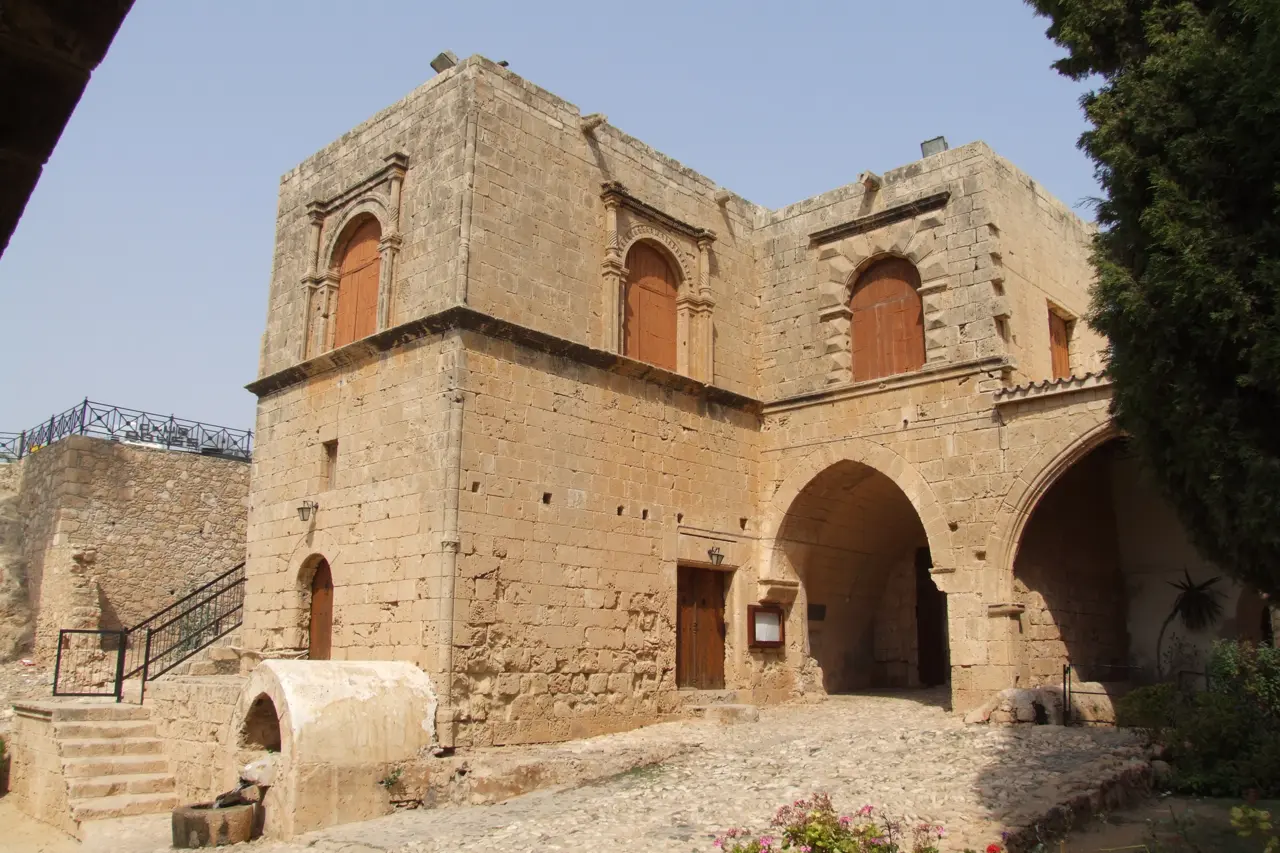
Sandstone monastery building with arched windows, an outside staircase and a vaulted passage by a cobbled courtyard
Photo: Claus Ableiter · CC BY-SA 3.0 · cropped

Ayia Napa Monastery

A medieval monastery in the village square, partly cut into the rock, with an ancient sycamore at its gate

Cost
Free entry
Time needed
20–45 min
Best time
Morning

Built around 1500 in the style of a medieval castle, the monastery sits in the heart of the village. Part of it lies underground, cut into the rock, and a tall wall encloses it. It honours Our Lady of the Forests, and the place name comes from napa, an ancient Greek word for a wooded valley. Entry costs nothing, and donations are welcome. From November to April it opens daily from 09:30 to 14:30, from May to October daily from 09:30 to 19:00, and on public holidays it stays closed. A sycamore at the south gate is thought to be more than 600 years old. By day the square is a calm landmark; in the evening the bars and clubs open and it gets lively.

Tip Visit in the morning: the winter closing time is early afternoon, and the square is quiet before the evening crowd arrives.

Source www.visitcyprus.com ·

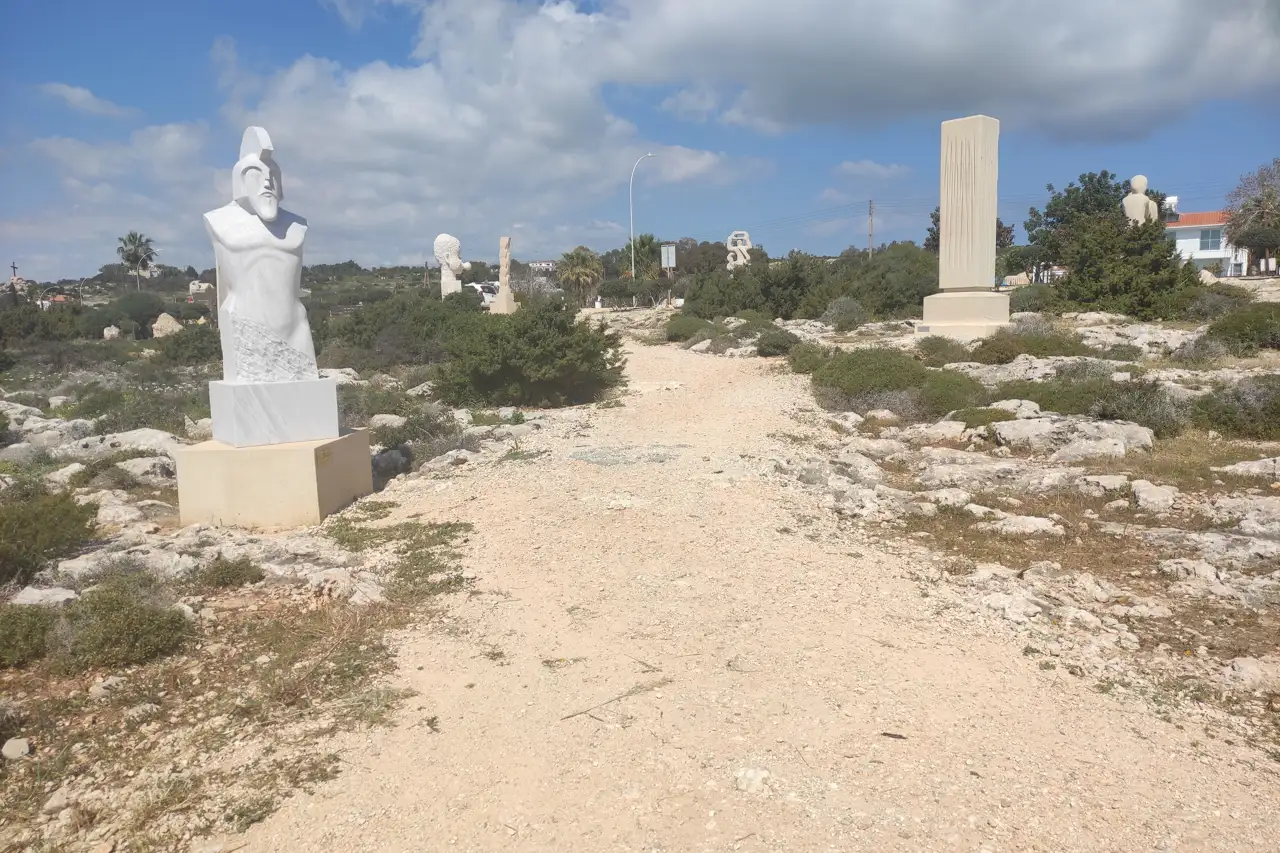
A white marble bust beside a sandy path through low shrubs, with more sculptures in the distance
Photo: Fry72, Karel Frydrýšek · CC BY-SA 4.0 · cropped

Ayia Napa Sculpture Park

Open-air park of sculptures by artists from around the world, next to a park of Mediterranean plants

Cost
Free entry
Time needed
30–60 min
Best time
All year

The sculpture park of 20,000 square metres lies at the crossroads of Cape Greco Avenue and Kryou Nerou Avenue, with a cactus park next to it. A walk through it comes with wide views and benches along the way. The collection holds works by more than 50 artists from around the world who took part in the annual Sculpture Symposium of the Ayia Napa Municipality, and new pieces are still being added. In 2015, artists made their sculptures on site over three weeks. Next to it, an extension called the Park of Mediterranean Plants, Cacti and Succulents fits into the same visit. Entry is free, and the park is open from sunrise to sunset all year round.

Tip It is open only between sunrise and sunset, so in winter arrive well before dusk, and in summer choose the cooler hours at the start or end of the day.

Source www.visitcyprus.com ·

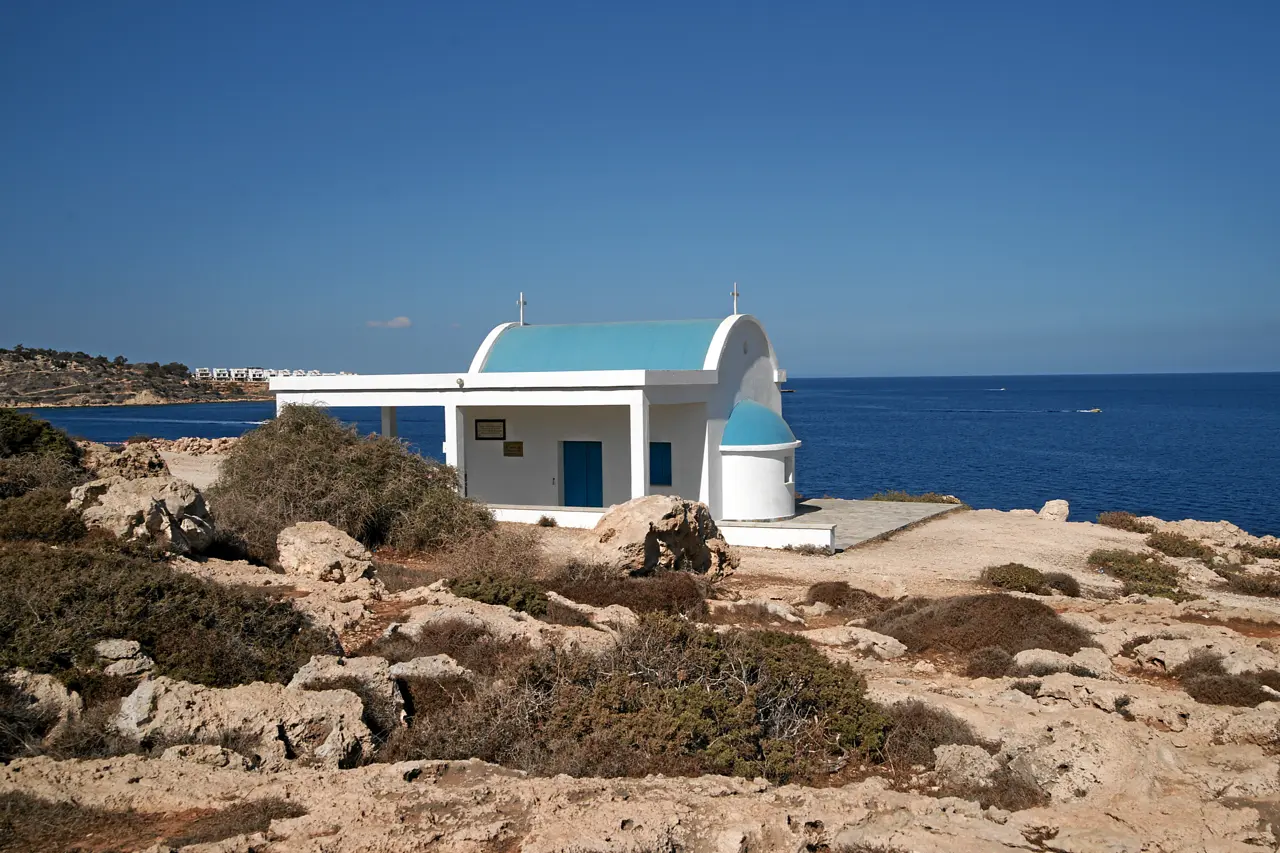
White chapel with a blue dome and roof on a rocky headland, low scrub in front and the open sea behind
Photo: Mboesch · CC BY-SA 4.0 · cropped

Agioi Anargyroi Chapel

Whitewashed chapel on the Cape Greco coast, a start and end point of the signposted nature trails

Cost
Free entry
Time needed
20–60 min
Best time
All year
Parking
Car park available

The tiny, whitewashed chapel of Agioi Anargyroi is a start and end point of the signposted Cape Greco nature trails, which the official guide calls free for public use. The Sea Caves to Agioi Anargyroi trail ends here, and the Konnoi to Agioi Anargyroi trail leads to it too. We treat it as an outdoor stop: you see the chapel from outside, and stone steps lead down to a sea cave where the saints known as Agioi Anargyroi are presumed to have lived as ascetics. According to the Municipality of Ayia Napa, the chapel is dedicated to Saints Cosmas and Damian, doctors who healed the sick without payment. By road, it is reached from the Protaras to Cape Greco main road, close to the cape.

Tip Combine it with the Kamara tou Koraka arch, which the same trail passes.

Source www.visitcyprus.com ·

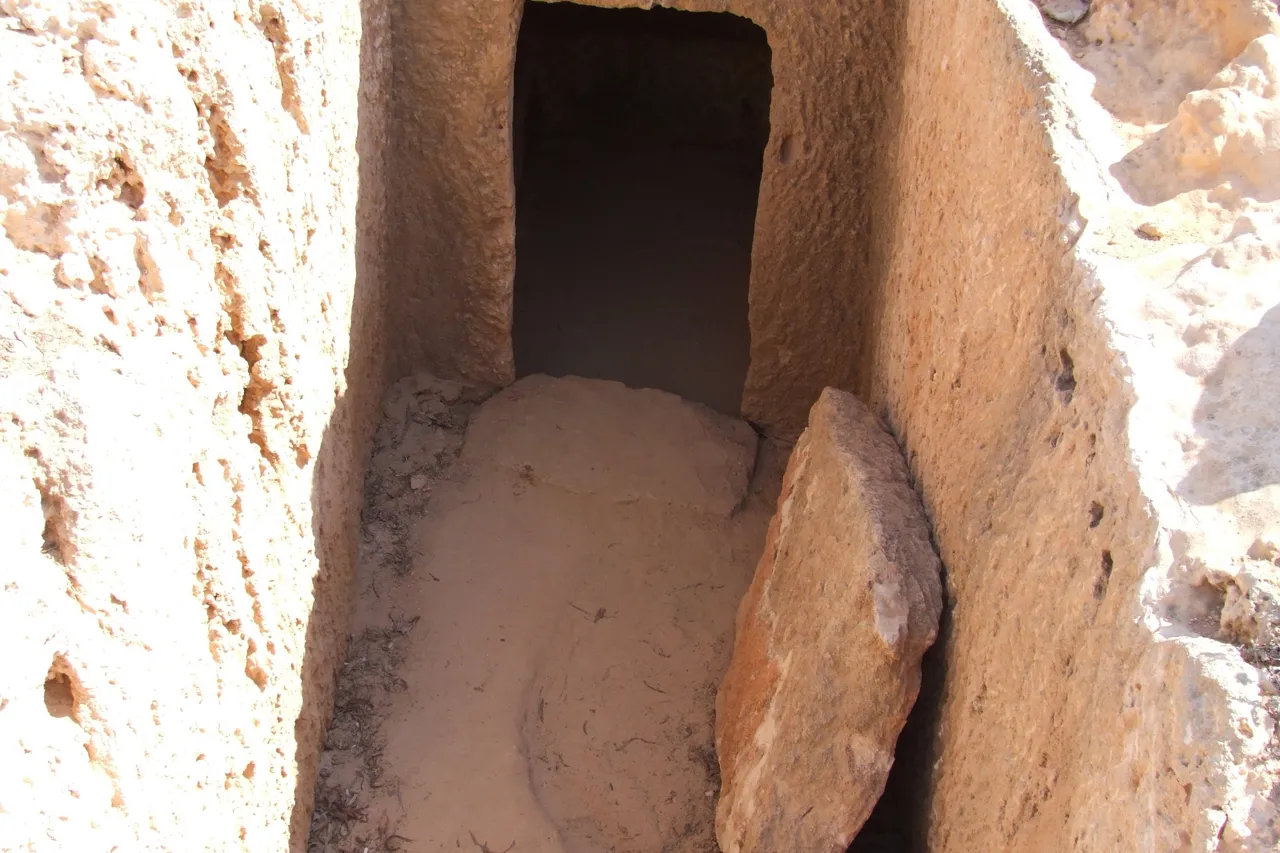
Entrance of a tomb cut into pale limestone, with a stone slab leaning in the opening
Photo: Claus Ableiter · CC BY-SA 3.0 · cropped

Makronissos Tombs

Hellenistic and Roman rock-cut tombs west of town, with a small sanctuary and an ancient quarry

Cost
Free entry
Time needed
20–45 min
Best time
Morning

West of Ayia Napa lies a burial site with a small sanctuary, an old quarry and 19 tombs cut into the rock. The tombs were used in Hellenistic and Roman times, and from 1872 onwards they suffered severe looting. Most chambers share one layout: a rectangular trench down the middle and three benches along the sides. The sanctuary is a plain rectangular enclosure of big, uneven blocks. Entry is free. The site is open daily from 09:00 to 17:00 all year, except on public holidays. Visit Cyprus warns that times and fees can change without notice, so check before you go.

Tip Plan your visit well before the 17:00 closing time, and combine it with Makronissos Beach, which is in the same area.

Source www.visitcyprus.com ·

Viewpoints

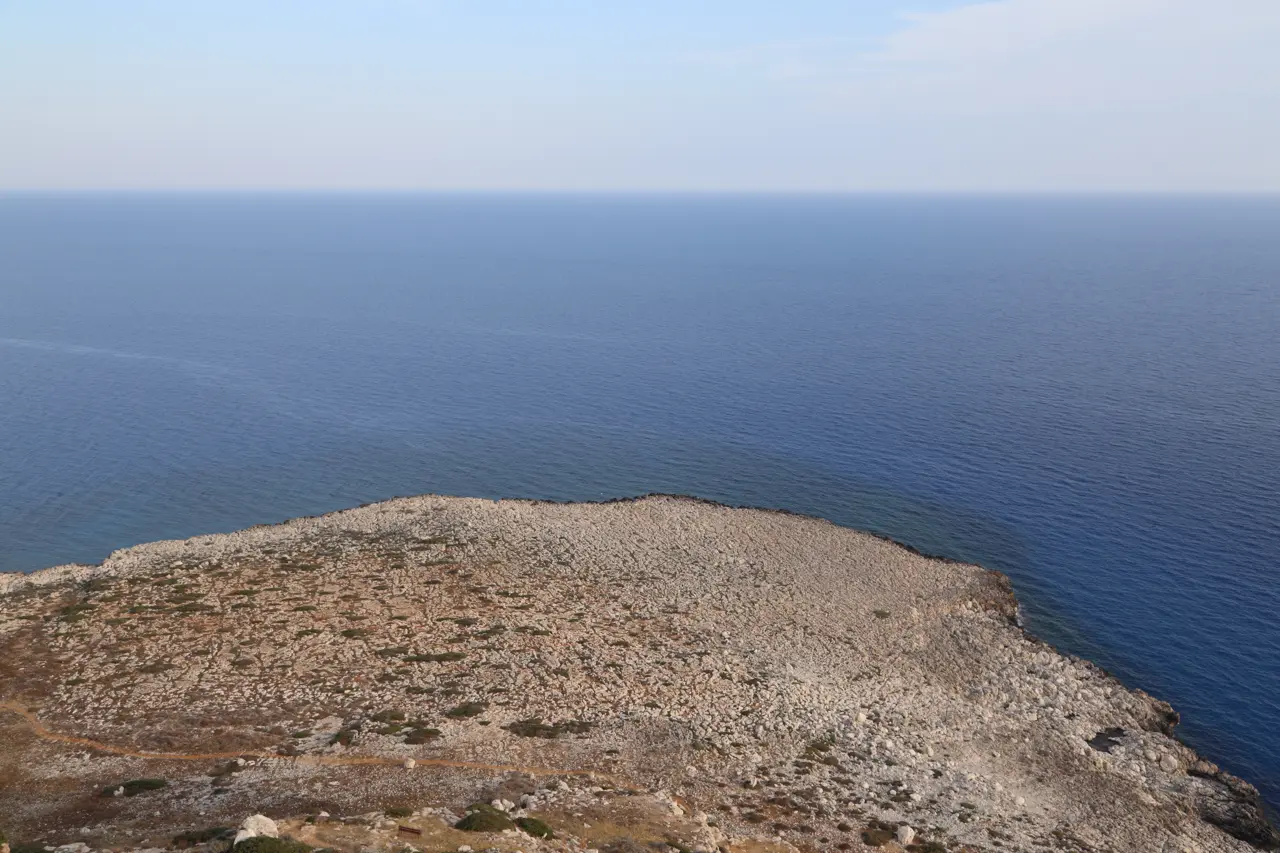
View from a hilltop over a bare, stony headland into the open sea
Photo: Dmitry Panov · CC BY 3.0 · cropped

Cape Greco Viewpoint

Hilltop lookout on Kavos hill with an all-round view of the cape, the coast and Ayia Napa

Cost
Free entry
Time needed
20–60 min
Best time
Sunset
Parking
Car park available

The viewpoint sits on Kavos hill, inside the Cape Greco National Forest Park. Visit Cyprus describes an unobstructed view on all points of the horizon: Ayia Napa to the west, the forest park to the north and, to the east, the tip of the cape with its lighthouse. A circular trail leads up and around the hill in about 45 minutes. It begins and ends at an old quarry with a parking site, reached by an unpaved road. The official guide warns that the south side of the hill ends in steep, rocky cliffs and notes that there is no drinking water on the route. The official Guide to Cyprus recommends lingering for the sunset along this coast.

Tip Time the walk so that you are on the hilltop before sunset, and take water, because there is none on the route.

Source www.visitcyprus.com ·

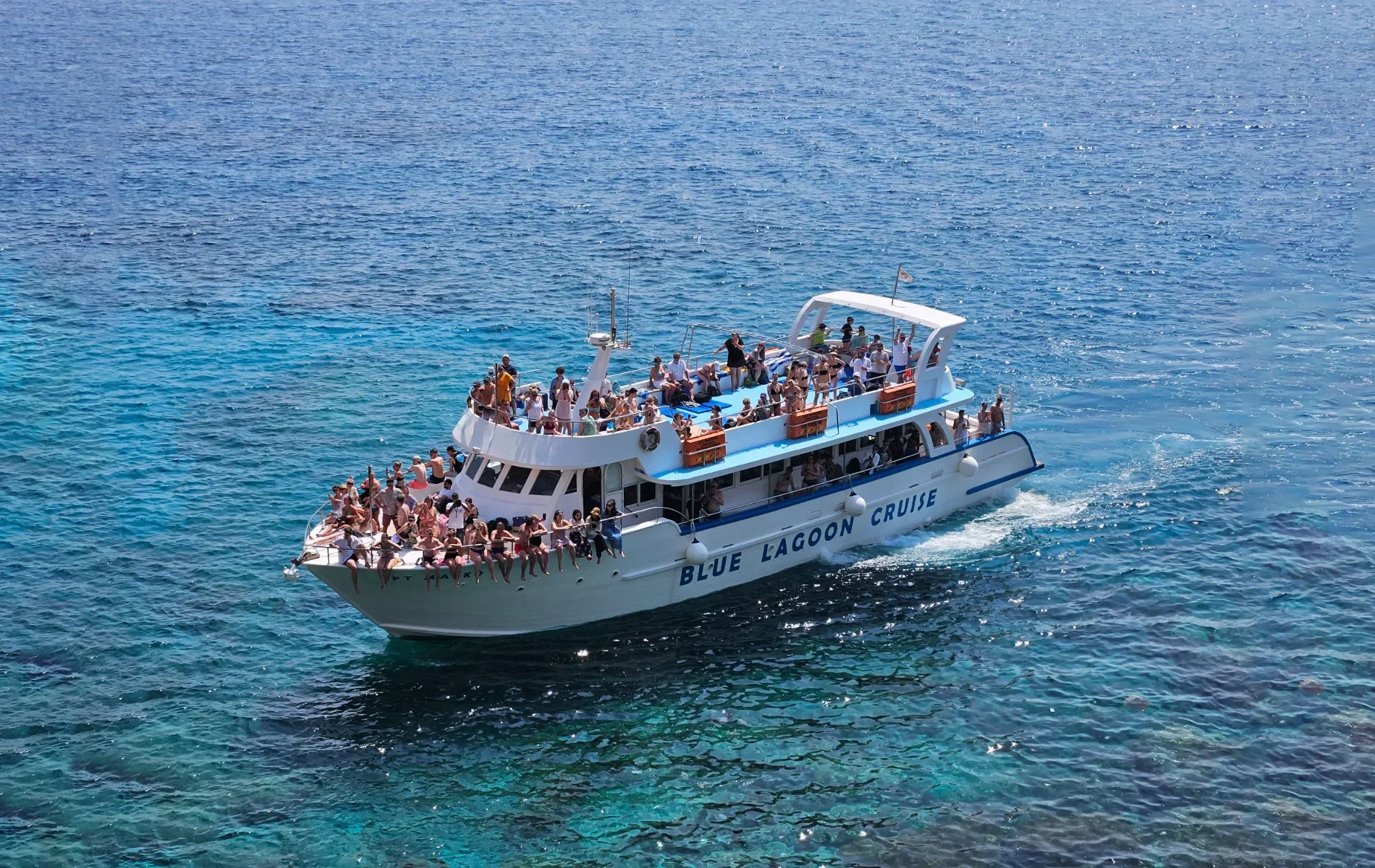
Costs something, still worth it

Bookable with Explorio

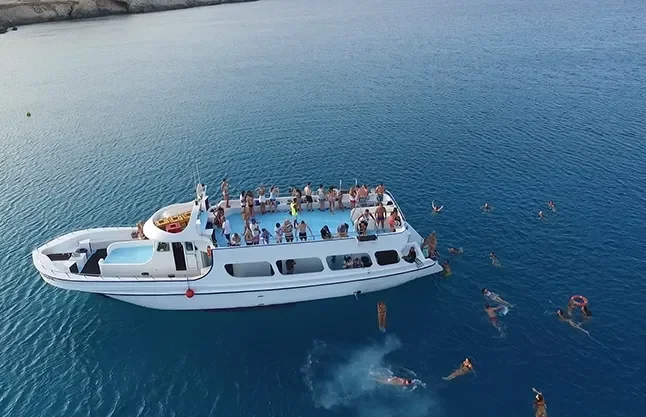
Boat Toursfrom €35/person
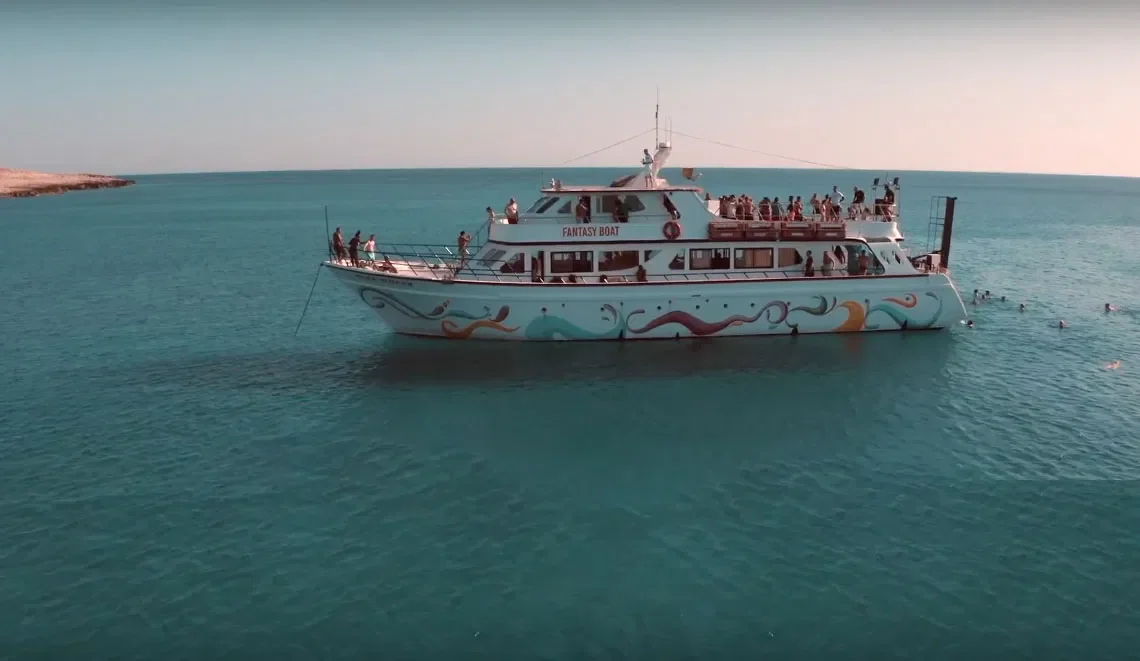
Boat Toursfrom €60/person

Nearby guides

  • Protaras

    Fig Tree Bay, Konnos Bay and the trails from Konnos are in our Protaras guide.

  • Paralimni

    Pernera, Kapparis, Agia Triada and the villages of the Kokkinochoria are in our Paralimni guide.

  • Cyprus

    For Troodos, Larnaca, Limassol and Nicosia, see our guide to the rest of Cyprus.

Frequently asked questions

Are the beaches in Ayia Napa free?
Yes. Visit Cyprus states that all beaches in Cyprus are public and free of charge. At the organised municipal beaches, showers, sunbeds and umbrellas are available for a fee.
Do sunbeds and umbrellas cost money?
Yes, at the organised beaches they are available for a fee. We show an amount only where an official source states one, so ask on site, or bring your own towel and sunshade.
Is Cape Greco free?
The park and its nature trails are free for public use. The visitor centre inside the park charges entry, with a reduced rate for children aged 6 to 11. The sources do not say whether parking is free or charged.
Can you swim or jump at the Sea Caves?
Jumping into the water at the Sea Caves is strictly forbidden according to the Joint Rescue Coordination Centre. The sources we checked do not say whether swimming there is allowed, so we list the caves as a place to look at from the trail. For a swim, choose a beach with lifeguards, which are stationed from April to October.
When are the free places less crowded?
In the morning. Visit Cyprus says Nissi Beach attracts large crowds and describes Vathia Gonia, east of it, as the less crowded neighbour, and the municipality advises starting Cape Greco walks early, before it gets too warm. The monastery closes at 14:30 in winter, the tombs at 17:00.
Which free places have opening hours?
Three of them publish hours: the monastery, the Makronissos Tombs and the sculpture park. For the other places, the sources we checked do not state hours, so check on site.